
If your ceiling still has a heavy textured finish, the question usually is not whether to improve it – it is how. When homeowners compare popcorn ceiling removal vs skim coating, they are usually trying to balance appearance, cost, dust, timeline, and how much disruption they can tolerate in the home.
For some ceilings, full removal is the right move. For others, skim coating over the existing texture after proper preparation is the cleaner, more practical option. The right choice depends on the condition of the ceiling, the age of the material, and the finish you want when the job is done.
Popcorn ceiling removal vs skim coating: what is the difference?
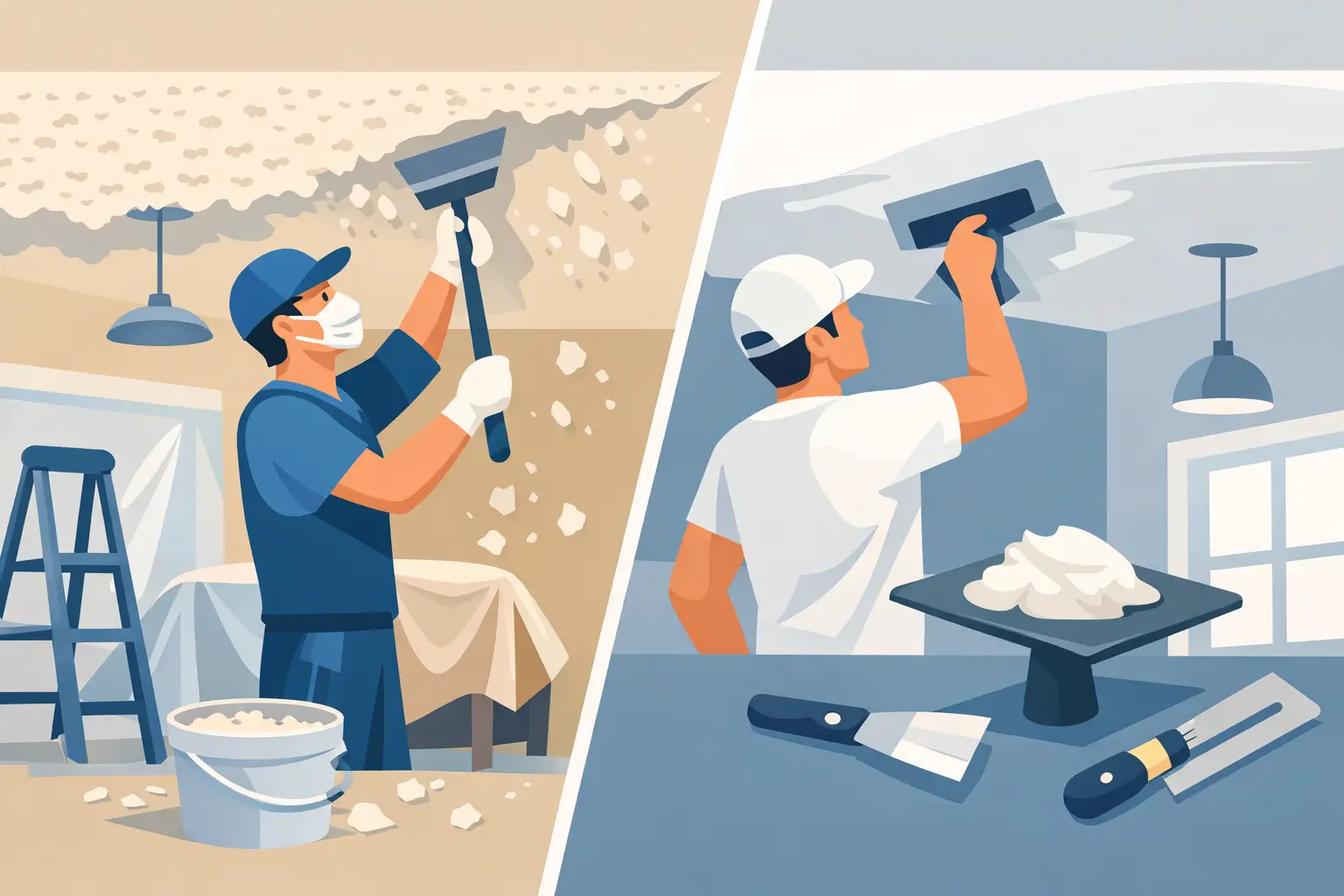
Popcorn ceiling removal means taking down the existing textured material so the original drywall surface can be repaired, smoothed, primed, and painted. In older homes, this can involve careful testing and containment before any work starts, especially if the ceiling was installed decades ago.
Skim coating is different. Instead of fully removing every bit of texture, the contractor prepares the surface, addresses loose or damaged areas, and applies thin coats of joint compound to create a flat, smooth finish over the ceiling. After sanding and priming, the surface is ready for paint.
Both methods can produce a modern ceiling. The difference is in how you get there, how much labor is involved, and what the existing surface allows.
When popcorn ceiling removal makes more sense
Removal is often the better option when the texture is already failing. If the popcorn is flaking, sagging, stained, or separating from the ceiling, covering over it may not give you a lasting result. A weak surface underneath can lead to future cracking or adhesion issues.
Removal also makes sense when previous repairs were done poorly. If the ceiling has patchy areas, uneven texture, water marks, or multiple layers of old paint, taking it back and starting fresh can produce a more consistent finish.
There is also a practical reason some owners choose removal. If you want to inspect the substrate, repair hidden damage, or correct old seam problems, the texture has to come off first. In that case, removal is not just cosmetic. It is part of a proper repair.
The trade-off is that removal can be messier and more time-consuming. Even with careful floor protection, plastic containment, and daily cleanup, this method tends to create more disruption than coating over a stable surface.
When skim coating is the better choice
Skim coating is often the smarter option when the popcorn texture is sound but outdated. If the material is well bonded, dry, and not breaking down, it may be more efficient to prepare and smooth over it instead of stripping it entirely.
This approach is popular in occupied homes and condos where cleanliness matters. It can reduce the level of demolition and often avoids the extra mess that comes with scraping a whole ceiling. For many owners, that matters just as much as the final look.
Skim coating can also help with minor unevenness. A skilled finisher can flatten shallow texture and create a clean modern surface that looks much better than the original ceiling. The key is proper prep. Loose areas still need to be removed, stains need to be sealed, and the finish work has to be even across the entire room.
That said, skim coating is not a shortcut for every problem ceiling. If the texture is too heavy, too loose, or damaged by moisture, trying to coat over it can lead to callbacks later.
Cost differences: labor usually decides the answer
Homeowners often assume skim coating is always cheaper than removal. Sometimes it is, but not always. The real cost depends on ceiling condition, height, access, room size, furniture protection, patching needs, and how much finishing work is required to get a smooth result.
Removal can involve testing, containment, scraping, repairs, sanding, priming, and painting. If the drywall underneath is rough or damaged, labor goes up quickly. A ceiling that looks simple from the floor can turn into a bigger repair once the texture is gone.
Skim coating may reduce demolition time, but it still requires skilled finishing. Applying multiple coats overhead, sanding them smooth, and correcting visible imperfections takes experience. If the existing texture is deep, more material and labor may be needed than expected.
In practical terms, the cheaper option is usually the one that fits the ceiling condition best. Choosing the wrong method to save money at the start can lead to a second repair later.
Mess, dust, and disruption inside the home
This is where popcorn ceiling removal vs skim coating often becomes a real-world decision instead of just a price comparison. Families living in the home, condo residents with limited space, and landlords working around tenants usually care a lot about how disruptive the project will be.
Removal tends to create more debris. Even when done carefully, scraping texture is a messy process. Rooms need to be protected properly, fixtures often need to come down, and cleanup standards matter.
Skim coating is still a finishing job, so there will be dust from sanding and preparation, but it can be more controlled when the existing surface is stable. For clients who want a smoother ceiling without the extra demolition, this is often the more convenient path.
Cleanliness depends heavily on the contractor. Good prep, proper masking, dust control, and a tidy work area make a major difference in how manageable the project feels while it is underway.
Which option gives the better finish?
Either option can look excellent when done correctly. The better finish usually comes from matching the method to the ceiling, not from assuming one method is automatically superior.
A fully removed ceiling can provide a very clean starting point, especially when underlying seams and defects are repaired properly. In rooms with significant damage or inconsistent old texture, this often gives the best long-term visual result.
A skim-coated ceiling can also look smooth and high-end, especially in spaces where the original texture is uniform and well adhered. The finish depends on craftsmanship. Poor skim coating will show lap marks, ridges, sanding scratches, or uneven flatness once paint hits the ceiling.
That is why experience matters. Ceiling work is unforgiving. Light from windows and fixtures reveals every flaw.
Older ceilings may require extra caution
In older homes, texture removal is not always just a finishing decision. Age matters. Some older popcorn ceilings may contain materials that require testing and a more controlled approach before any scraping begins.
That does not automatically mean the project cannot move forward. It simply means the ceiling should be assessed properly first. A professional contractor will tell you whether the surface can be removed safely, skim coated after preparation, or whether another approach makes more sense.
For homeowners, this is one area where guessing is a bad idea. A proper evaluation protects your home, your timeline, and your budget.
How to choose between popcorn ceiling removal vs skim coating
The best choice comes down to four questions. Is the existing texture stable? Has the ceiling been damaged by water or cracking? How smooth do you want the final result to be? And how much disruption are you willing to deal with during the job?
If the ceiling is damaged, failing, or hiding repair issues, removal is often the more responsible choice. If the texture is solid and the goal is to modernize the room efficiently, skim coating may be the better value.
For many Toronto-area homeowners, the smartest next step is not choosing a method online. It is having the ceiling looked at by a contractor who handles both types of work and can recommend the right one based on condition, not guesswork. Maximum Services has been helping homeowners since 2001 with popcorn ceiling updates, drywall repair, and interior finishing, and the difference usually starts with a clear, honest assessment.
A good ceiling job should leave the room looking cleaner, newer, and more finished than before. The right method is the one that gets you there without creating problems you have to pay for twice.
One response
[…] is especially relevant after water damage, furniture impact, removed wallpaper, or popcorn ceiling removal. Repairing the damaged area is only part of the job. The repaired section must blend into the […]