
A hallway wall can look worn long before the room truly needs a full repaint. Shoe marks, moving-day scrapes, furniture rubs, and everyday contact leave dull streaks that stand out against a clean painted surface. This guide to fixing wall scuffs explains how professionals assess the mark, protect the surrounding finish, and determine whether cleaning, touch-up painting, or drywall repair is the right solution.
Why Wall Scuffs Need the Right Fix
Not every dark mark on a wall is the same. A light surface scuff may come from shoes, luggage, chair backs, or a vacuum. It often sits on top of the paint and can be removed without affecting the wall itself. A deeper mark may have worn through the paint, compressed the drywall paper, or left a shallow gouge. Treating both problems the same way can make the area look worse.
Aggressive cleaning is a common mistake. A rough sponge, strong solvent, or repeated scrubbing can leave a shiny patch on flat paint or remove color altogether. Even if the scuff disappears, the wall can be left with a visible faded spot that catches the light differently than the rest of the room.
The right repair depends on the paint sheen, the age of the paint, the wall condition, and how noticeable the area is. Walls in entryways, stairwells, hallways, and children’s rooms usually receive the most wear. These high-traffic areas often benefit from more than a quick spot treatment, especially when multiple scuffs have built up over time.
Start With a Professional Surface Assessment
Before any repair begins, the wall should be inspected under normal room lighting and, when needed, angled light. This helps reveal whether the problem is only on the paint surface or extends into the drywall. A professional also checks for loose paint, dents, nail holes, stains, and previous touch-up marks nearby.
Surface scuffs that have not damaged the paint may respond to gentle cleaning with a mild wall-safe cleaner and a soft cloth. The goal is to lift the transfer mark without changing the finish. This approach works best when the original paint is washable and in good condition.
If the wall looks lighter after cleaning, feels rough, or has exposed drywall paper, it needs a repair and paint touch-up. In many cases, a small scuff reveals a larger issue: old paint that has become difficult to clean, uneven prior touch-ups, or a wall surface that was not properly prepared before painting.
When a Scuff Is Actually Drywall Damage
A scuff can hide minor drywall damage. Furniture corners, door handles, and moving boxes can dent the wall beneath the paint. If the area has a depression, torn paper, cracking, or a raised edge, paint alone will not create a smooth result.
The damaged spot must be stabilized, filled with the appropriate compound, sanded smooth, primed, and painted. Skipping the primer is risky when drywall paper is exposed. The repaired area may absorb paint differently and leave an uneven, flashing appearance after it dries.
For larger dents or repeated impact damage, a broader repair may be needed to blend the patch into the surrounding wall. This takes careful feathering and sanding. The best repairs are the ones that disappear once the wall is painted, not patches that remain visible from across the room.
Cleaning, Touch-Up Painting, or Repainting?
The most cost-effective solution is not always the smallest repair. A single light scuff on a recently painted wall may only need careful cleaning. A small paint loss can often be repaired with a properly matched touch-up. But when the wall has several marks, faded areas, or old paint with no exact color record, repainting the full wall is usually the cleaner choice.
Touch-up painting can be surprisingly difficult. Paint color changes over time due to sunlight, cleaning, smoke, cooking residue, and general aging. Even when the original paint can is available, a touch-up may dry slightly different from the surrounding surface. Flat paint is generally more forgiving than satin, eggshell, or semi-gloss finishes, which tend to show overlap and texture differences.
A professional painter evaluates whether a spot repair will blend well enough to meet the standard you expect. In a rental unit between tenants, a small touch-up may be practical if it is not noticeable. In a main living room, condominium hallway, or carefully finished home, repainting one complete wall often provides a more consistent result.
A Guide to Fixing Wall Scuffs Without Creating New Marks
A clean repair process matters as much as the paint itself. Floors, baseboards, furniture, and nearby doors should be protected before work starts. Any sanding dust should be contained and cleaned up properly, particularly in condos where dust can travel quickly through a small space.
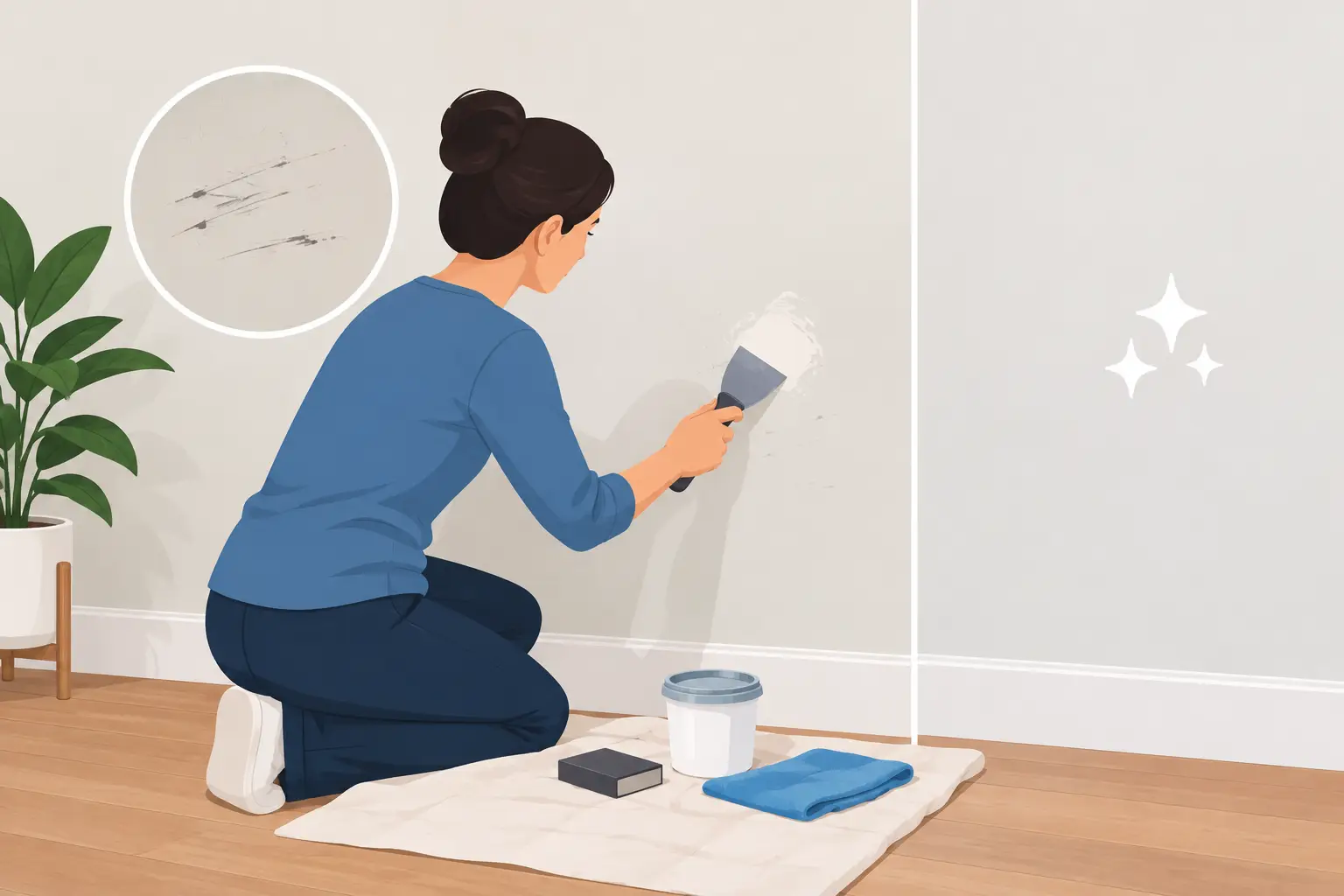
The wall is then cleaned and allowed to dry before filling or painting. For scuffs that require repair, the damaged area is sanded only as much as necessary. The repair is feathered so there is no obvious hard edge beneath the new paint. Primer is applied where needed, followed by carefully selected paint in the correct sheen.
Paint matching is not only about color. A close color match in the wrong sheen can still look wrong. A satin patch on an eggshell wall, for example, may reflect more light and appear as a darker rectangle. Proper application also matters. Brush marks, roller texture, and coverage must blend with the existing surface.
This is why professional work often includes repainting a full section or wall when the condition calls for it. It takes more material and time than a simple dab of paint, but it avoids the patchy appearance that can result from repeated touch-ups.
High-Traffic Areas Need a Longer-Term Plan
If wall scuffs return frequently, the issue may be the location rather than the quality of the repair. Narrow hallways, staircases, entrance areas, and spaces behind dining chairs naturally see more contact. Families with young children, pets, or active households may also find that low-sheen, washable paint provides a better balance of appearance and cleanability.
Paint finish is a trade-off. Flat paint helps hide minor surface imperfections but can be harder to clean, depending on the product. Eggshell and satin finishes are generally easier to maintain, although they can reveal drywall flaws and repair patches more readily. The best choice depends on the wall condition, lighting, room use, and the finish used throughout the home.
For landlords and property managers, addressing scuffs before listing or showing a unit can make a meaningful difference. Fresh, clean walls signal that the property has been cared for. A small repair completed properly can help avoid the larger cost of repainting after the marks have multiplied or after a tenant’s move-out reveals hidden damage.
When to Bring in a Professional Painter
Calling a professional makes sense when the scuff covers a large area, has damaged the drywall, appears on a textured surface, or sits in a highly visible location. It is also a practical choice when there is no matching paint, when several walls need attention, or when the room already has uneven repairs from past touch-ups.
An experienced drywall repair and painting team can assess the wall, recommend the appropriate scope of work, and complete preparation, repair, painting, and cleanup in one visit or scheduled project. This is especially useful for busy homeowners and condo residents who want the problem handled correctly without turning a small cosmetic issue into a weekend project.
Maximum Services has served homeowners and property owners in Toronto and the GTA since 2001, with a focus on clean workmanship, careful surface preparation, and dependable turnaround. Whether the solution is a minor repair or repainting a damaged wall, the goal is the same: a smooth, consistent finish that looks like the scuff was never there.
A wall scuff may seem minor, but the right repair protects the appearance of the entire room. If the mark is visible every time you walk past it, it is worth having it assessed and finished properly.
No responses yet