
A brown ceiling ring, paint that starts bubbling near a window, or a wall that suddenly feels soft should never be treated as a paint problem alone. This guide to drywall moisture inspection helps homeowners and condo residents recognize the warning signs, understand what they may mean, and decide when it is time to bring in a professional for repair and finishing.
Drywall can hide a surprising amount of water damage behind an otherwise ordinary-looking surface. The sooner moisture is identified and the water source is addressed, the better the chance of limiting damage, preventing mold growth, and avoiding a larger repair later.
Why Drywall Moisture Needs Prompt Attention
Drywall is made with a gypsum core and paper facing. Once that paper absorbs water, it can stain, loosen, swell, or become a suitable surface for mold. Even a small leak can travel along framing, plumbing lines, or ceiling cavities before it becomes visible in the room below.
The visible damage is not always the full extent of the issue. A ceiling stain may come from a roof leak, plumbing problem, overflowing fixture, or an upstairs unit in a condo building. A damp patch near a window can point to failed caulking, exterior water entry, or condensation. Correct repair starts with finding and stopping the source, not simply painting over the mark.
In Toronto-area condos, moisture problems can also involve shared plumbing, neighboring units, or building systems. Report suspected active leaks to property management promptly, especially when water may be coming from above or from a common area.
Common Signs of Moisture Behind Drywall
Some water damage is obvious. Other times, the signs are small enough that they are missed until the drywall begins to fail. Look closely after heavy rain, plumbing work, an appliance leak, or any water-related incident.
Stains, Discoloration, and Changing Paint
Yellow, brown, or gray staining is one of the clearest warning signs. Water rings often appear on ceilings below bathrooms, kitchens, or rooflines. On walls, look for uneven color near baseboards, windows, exterior corners, and plumbing fixtures.
Paint may bubble, peel, crack, or develop a dull patch. Fresh paint does not solve an active moisture problem. If the wall is not fully dry and the source has not been corrected, staining and peeling can return through the new finish.
Soft, Swollen, or Uneven Areas
Drywall should feel firm when lightly pressed. A soft spot, raised seam, bowed section, or crumbling edge suggests that the material has absorbed moisture. Baseboards that pull away from the wall, lift at the ends, or show swelling may also indicate water has reached the lower portion of the drywall.
Ceilings deserve extra care. If a ceiling is sagging, bulging, or feels soft, keep clear of the area. Wet ceiling drywall can become heavy and may fall without much warning.
Musty Odors and Surface Growth
A persistent musty smell can indicate moisture in a wall or ceiling cavity, even if you cannot see a stain. Dark spotting, fuzzy growth, or discoloration around baseboards, window trim, vents, and corners should be assessed promptly.
Not every dark mark is mold, and not every moisture issue produces visible growth. The practical concern is the same: the area needs to be dried, the cause needs to be corrected, and compromised materials may need removal.
A Practical Guide to Drywall Moisture Inspection
A careful visual inspection can provide useful information, but it should be done safely and with realistic expectations. You may be able to identify the affected area, but determining the full extent of hidden moisture often requires professional equipment and experience.
Start by looking for the highest likely source of water. For a ceiling stain, inspect the room or roof area above it. For damage on a wall, consider nearby bathrooms, kitchens, laundry connections, exterior walls, windows, and HVAC equipment. Water can move sideways or downward, so the source may not sit directly over the stain.
Next, check the surrounding surfaces in good light. Compare the suspected spot with nearby drywall for changes in texture, color, sheen, or flatness. Run the back of your hand gently over the area. Cooler surfaces, softness, or a noticeable change in texture can justify a closer assessment.
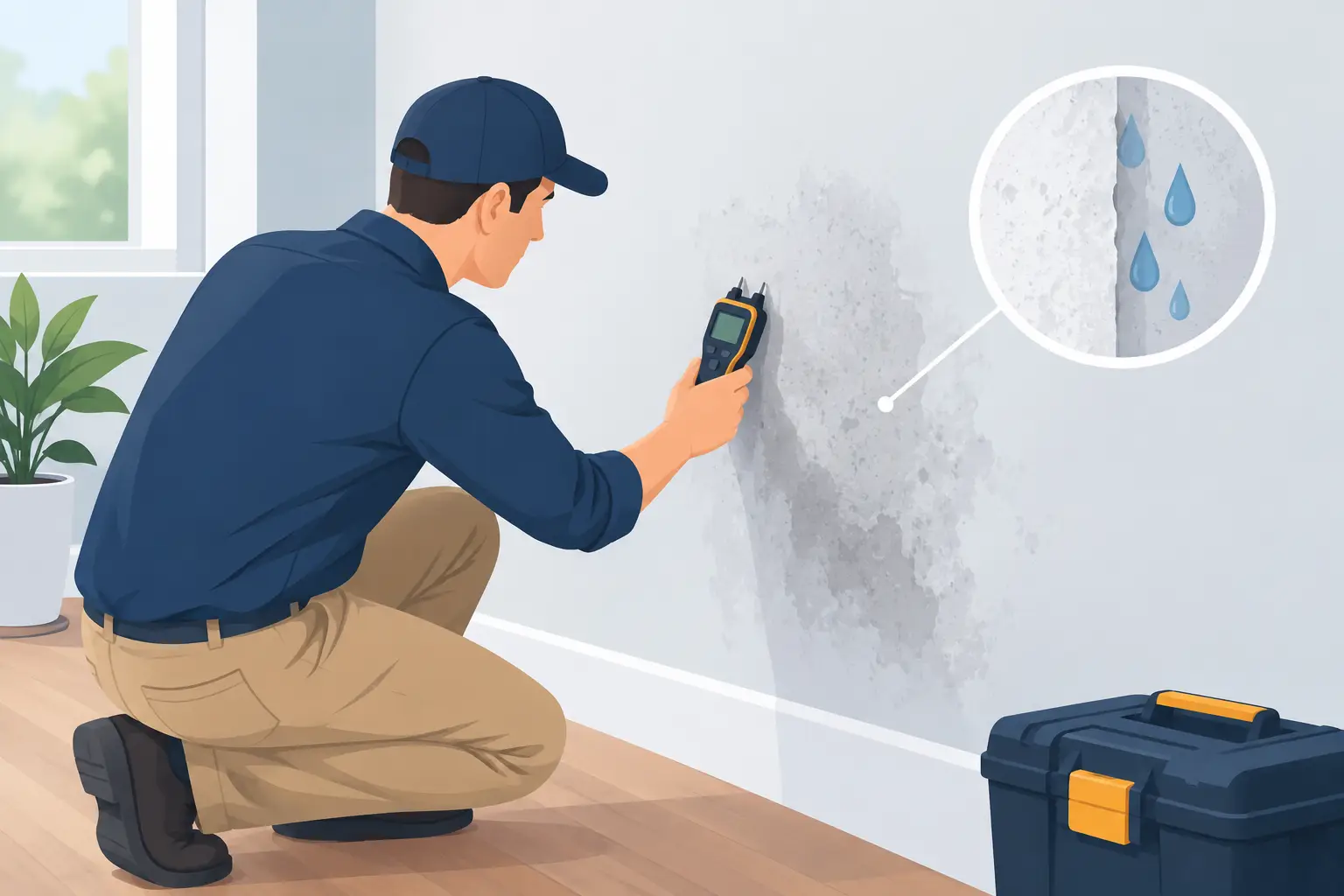
A moisture meter can help when used correctly. Pin-type meters test moisture below the drywall surface, while pinless meters scan a broader area without making holes. Readings can be affected by metal studs, fasteners, insulation, and surface materials, so one reading alone should not determine the scope of repair. The most useful approach is comparing the suspicious area with a known dry area on the same wall or ceiling.
Infrared cameras can also reveal temperature differences that may suggest dampness. However, cooler areas can be caused by insulation gaps, air leaks, or cold exterior conditions. Thermal imaging is a useful clue, not proof of moisture. A professional inspection combines moisture readings, visual evidence, the location of plumbing or exterior openings, and the condition of the drywall itself.
Do not cut into drywall simply to investigate unless you understand what may be behind it. Electrical wiring, plumbing, and building components can be concealed inside the wall. In a condo, unauthorized openings may also create issues with building rules or responsibility for repairs.
When Drywall Can Be Dried and When It Should Be Replaced
The right solution depends on how much water was involved, how long the drywall stayed wet, and whether the paper facing or gypsum core has deteriorated. A small area that became damp from a brief, clean-water incident may dry successfully if it is addressed immediately and remains firm, flat, and free of odor.
Replacement is usually the better choice when drywall is soft, swollen, sagging, crumbling, stained through, or affected by visible mold. Drywall exposed to sewage, floodwater, or other contaminated water should not be saved. The same applies when moisture has remained trapped long enough for mold or odor to develop inside the cavity.
A proper repair is more than replacing a damaged patch. It may include removing compromised drywall, checking framing and insulation, allowing the area to dry, installing new material, taping joints, applying smooth compound coats, sanding carefully, priming, and painting for a consistent finish. Skipping drying time or surface preparation is one reason repaired areas can later show flashing, uneven texture, or recurring stains.
Protecting the Finish After a Moisture Repair
Once the water source is fixed and the damaged material has been handled correctly, finishing quality matters. Drywall repairs are especially noticeable in rooms with flat walls, strong natural light, or smooth ceiling finishes. The goal is not merely to cover a patch, but to restore an even surface that blends into the room.
Stain-blocking primer is often needed before painting an area with prior water marks. Standard wall paint may allow discoloration to bleed through. The correct primer and paint system depends on the surface condition and whether the drywall was repaired, replaced, or simply dried.
For homeowners who want the work completed cleanly and on schedule, a qualified drywall repair contractor can assess the visible damage, repair affected areas after the moisture issue is resolved, and provide the final paint finish. Maximum Services has served homeowners and condo residents with detailed drywall repair and interior painting work since 2001.
If you see a new stain, feel a soft spot, or notice a musty odor, act before the damage spreads. Address the source first, document the affected area if insurance or condo management may be involved, and arrange repair only after the space is dry enough for a lasting finish.
No responses yet