
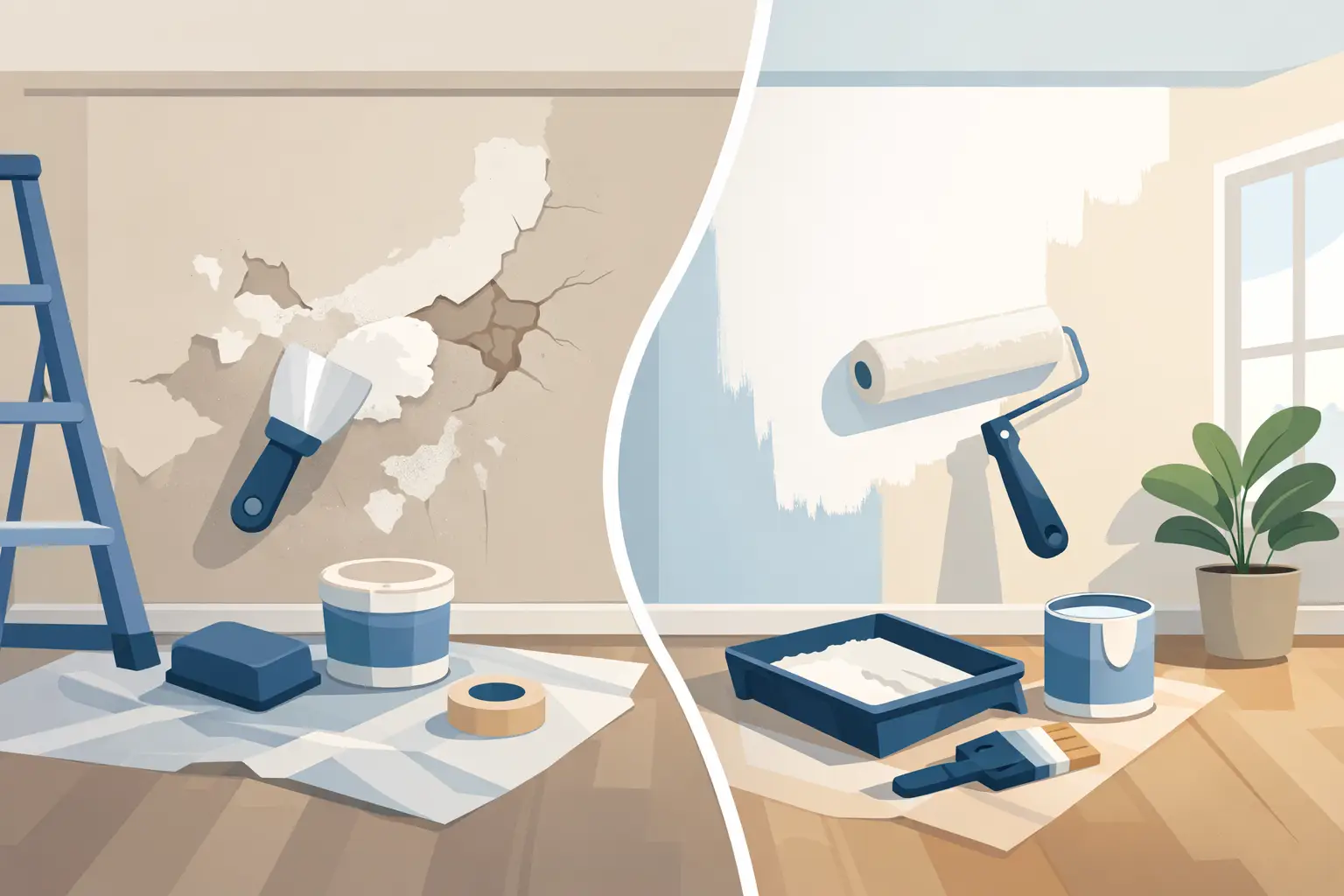
Fresh paint can brighten a room fast, but it will not hide damaged walls. In fact, skipping wall repair before painting usually makes every dent, crack, seam, and patch stand out more once the new finish dries. If you want walls to look clean, smooth, and professionally finished, the repair work has to come first.
That is where many paint jobs go wrong. A room may get a good color change, but if the drywall has nail pops, tape issues, water stains, corner damage, or rough patchwork, the final result still looks unfinished. Homeowners and condo owners often notice this only after the paint is on, when fixing it becomes more disruptive and more expensive.
Why wall repair before painting matters
Paint is a finish coat, not a correction tool. It adds color and sheen, but it also reflects light across the surface. That reflection tends to highlight uneven areas, especially in hallways, living rooms, and rooms with large windows. Even minor imperfections can become easy to spot once a fresh coat is applied.
Proper wall repair before painting creates a flat, stable surface so the paint can do its job. That means better adhesion, more even coverage, and a cleaner final appearance. It also helps prevent recurring issues. If a drywall crack is painted over without being repaired properly, there is a good chance it will come back.
For occupied homes and condos, this matters beyond appearance. A complete prep process reduces the chance of rework, cuts down on repeated dust and disruption, and gives you a finish that lasts longer under normal wear.
What professionals look for before painting starts
Not all wall damage is obvious from across the room. A professional assessment usually catches problems that are easy to miss until bright paint or natural light exposes them.
Small dents from furniture, screw holes from old wall hangings, and scuffs in high-traffic areas are common. More serious problems include separated drywall tape, settlement cracks, popped fasteners, soft spots from moisture, and poorly sanded older repairs. In condos, damage often shows up around corners, entryways, and areas where previous patching was done quickly.
Texture differences are another issue. Even if a hole has been filled, the repaired area may absorb paint differently from the surrounding wall. Without proper finishing and priming, those spots can flash through the topcoat and leave visible dull patches.
A reliable contractor does not just look for where the wall is broken. They look for where the surface will fail to look consistent after painting.
Common wall issues that should be fixed first
Nail pops and screw pops
These are small raised circles where fasteners push against the drywall surface. They are common in older homes and in walls that have had minor movement over time. Painting over them does not solve the problem. The raised area remains visible, and in some cases the paint can crack around it.
Cracks at seams and corners
Hairline cracks may seem minor, but they often point to movement at joints or weak prior repairs. Inside corners and ceiling lines are especially prone to this. A proper repair usually involves more than filler alone. If the cause is not addressed, the crack often returns.
Holes, dents, and impact damage
From doorknobs to moving furniture, everyday use leaves marks. Small holes can often be filled and finished smoothly, while larger damage may require cutting, patching, taping, and blending. The goal is not just to close the hole, but to make the repair disappear under paint.
Water damage and staining
This is one area where painting too soon creates bigger problems. If the source of moisture is still active, the repair will not hold. Even after the area dries, damaged drywall may need replacement, and stains often require stain-blocking primer before repainting.
Bad previous patchwork
This is more common than many property owners expect. Uneven filler, poor sanding, mismatched texture, and visible patch outlines can all show through a new paint job. Sometimes the biggest part of the work is correcting an earlier repair that was rushed.
The difference between a quick patch and a proper finish
A lot of wall repairs look acceptable before painting. The real test comes after primer and topcoat go on. That is when surface flaws become easier to see.
A quick patch may fill the damaged area, but it often leaves a hump, edge line, or texture mismatch. A proper finish involves feathering the repair into the surrounding surface, sanding it smooth, checking it under light, and priming it correctly so the final paint sheen stays even.
This is why repair and painting should be treated as one connected process, not two separate tasks. If the repair crew and painter both understand the final finish standard, the end result is much stronger.
Why this matters in Toronto-area homes and condos
Homes and condos in the Toronto and GTA market often have a mix of older drywall, previous renovations, and wear from everyday use. In many units, walls have been painted multiple times over patched areas, anchor holes, and minor settling cracks. Once a new color goes on, especially in a lower-sheen or brighter finish, those hidden flaws can become obvious.
For landlords and property managers, that can affect rental presentation. For homeowners, it affects the overall feel of the room. Clean paint on damaged walls does not create the polished look people expect after investing in interior work.
That is why experienced surface prep matters. A contractor who has spent years handling both drywall repair and painting understands how to make the wall look right before the first coat ever starts.
What a professional wall repair before painting process should include
A dependable service starts with a clear review of wall condition and the scope of repair needed. Some rooms need only minor cosmetic touch-ups. Others need more extensive drywall work before paint can begin. The right approach depends on how visible the damage is, what caused it, and what finish is expected.
Surface protection is part of that process as well. Floors, furniture, and nearby areas should be protected before sanding and repairs begin. Cleanliness matters, especially in occupied homes, condos, and multi-room projects.
After repairs are completed, the surface should be sanded smooth and checked for consistency. Primer is often needed over patched areas to seal the surface and prevent flashing. Only then should finish painting begin. When this sequence is followed properly, the final result looks uniform instead of patched and painted.
When it makes sense to call a pro
If the walls have recurring cracks, visible seams, multiple repairs, water damage, or textured areas that need blending, it is usually worth bringing in an experienced contractor. The same is true if the room has strong natural light, because those conditions expose surface flaws quickly.
Most property owners are not looking to manage separate trades or guess at what needs repair before painting. They want the work handled properly, with minimal mess and a finish that looks complete. That is where an established company with drywall repair and interior painting experience brings real value.
Maximum Services has been helping property owners with this kind of work since 2001, and the difference usually comes down to careful prep, consistent workmanship, and respect for the home while the job is underway.
The result you actually want
Most people do not book painting because they want paint on a wall. They book it because they want the room to look cleaner, newer, and better maintained. That only happens when the surface underneath is repaired the right way.
Wall repair before painting is what turns a basic paint job into a finished result. If the goal is a smooth appearance, lasting finish, and less chance of callbacks or touch-ups later, prep work is not the extra step. It is the step that makes the rest of the job worth doing.
If your walls show cracks, dents, patches, or signs of wear, it is worth fixing them properly before the first brush or roller comes out.
3 Responses
[…] helps protect what matters most to you. It also lets painters see the entire surface, including wall damage behind furniture, scuffed baseboards, nail holes, and areas where old paint has failed. These details are easier to […]
[…] communication, timing, and cleanup. For example, a customer may describe how damaged drywall was repaired before painting, how furniture and floors were protected, or how the crew responded when a small concern came up […]
[…] proper interior job begins with preparation. Damaged drywall should be repaired, patched areas should be sanded smooth, and dust should be controlled before […]