
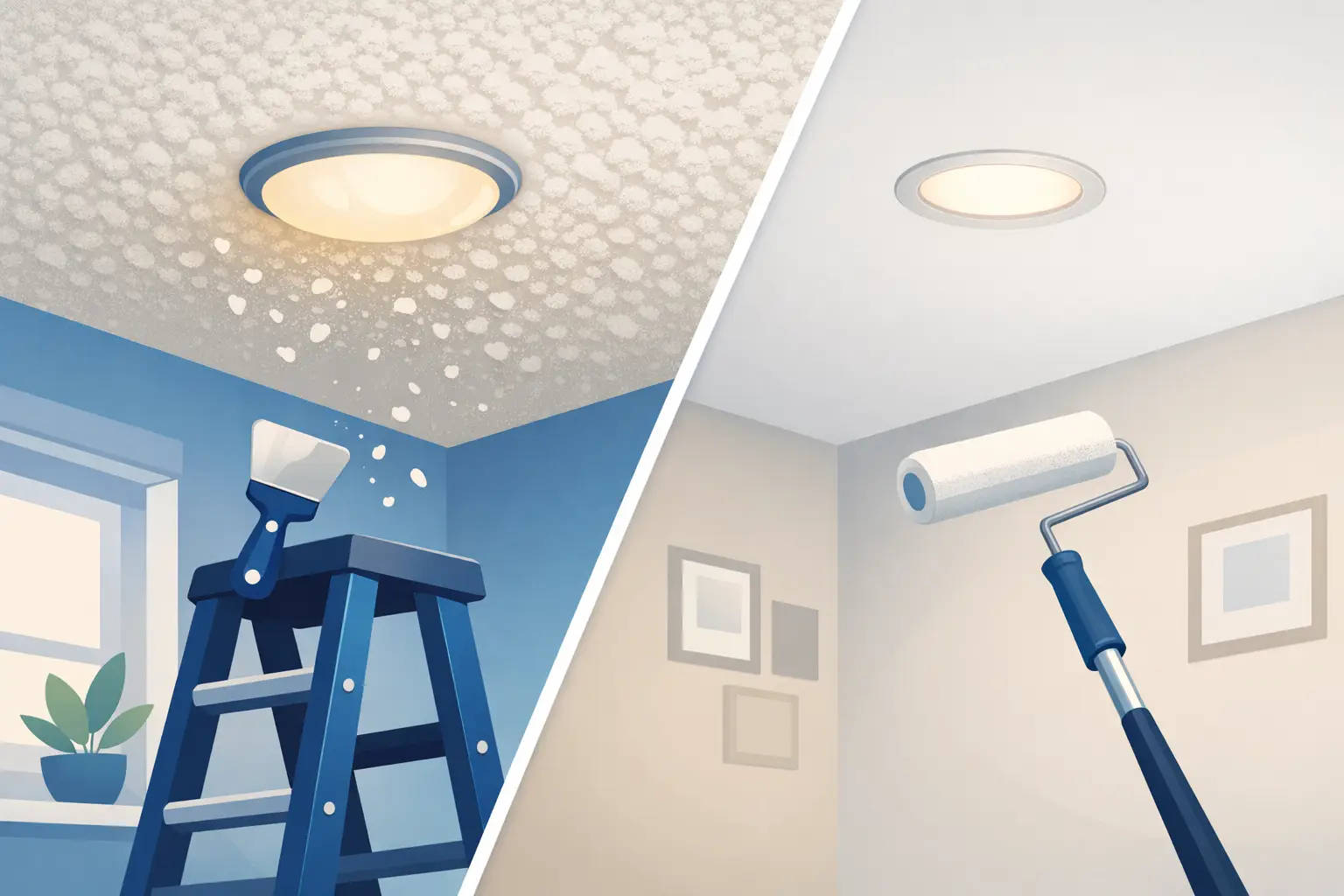
If you are deciding on popcorn ceiling versus smooth ceiling, the choice usually comes down to one simple question: do you want to hide imperfections, or do you want a cleaner, more updated finish? For most homeowners, condo owners, and landlords, that decision affects more than appearance. It changes how a room reflects light, how repairs are handled, and how the space is perceived by guests, tenants, or buyers.
In older homes and condos, popcorn ceilings were once common because they were fast to apply and good at disguising surface flaws. Today, smooth ceilings are the finish more people ask for when they want a cleaner, brighter, more modern interior. That does not mean popcorn is always the wrong choice. It means the better option depends on the condition of the ceiling, the age of the property, and how long you plan to keep it.
Popcorn ceiling versus smooth ceiling: what changes the most?
The biggest difference is visual impact. A popcorn ceiling has a textured surface that breaks up light and draws less attention to uneven drywall underneath. A smooth ceiling has a flat, refined finish that looks cleaner and more current, but it also shows defects more easily if the prep work is poor.
That is why workmanship matters so much. A popcorn ceiling can conceal small imperfections. A smooth ceiling cannot. If there are tape joints, patches, settlement cracks, or old repairs above eye level, they need to be properly corrected before a smooth finish is applied. Otherwise, the ceiling may look worse, not better.
There is also a difference in how the room feels. Textured ceilings can make a space look dated, especially when paired with older paint colors or worn trim. Smooth ceilings tend to reflect light more evenly and create a more open appearance. In condos, hallways, living rooms, and lower-ceiling bedrooms, that change can be surprisingly noticeable.
Appearance and resale value
For most residential properties, smooth ceilings win on appearance. Buyers and tenants generally associate them with a more modern, better-maintained space. If the rest of the room has been updated but the ceiling still has heavy texture, it often stands out for the wrong reason.
This matters most in kitchens, living areas, entryways, and primary bedrooms. In these spaces, ceiling texture affects the overall impression of the room. Smooth ceilings help fresh paint, trim, lighting, and wall repairs look more finished.
That said, resale value is rarely about one ceiling alone. If the home has multiple dated surfaces, replacing popcorn ceilings can be part of a broader cosmetic update that improves market appeal. If everything else is already in excellent condition, removing the texture may simply help the property feel more consistent and polished.
For landlords, the decision can be practical rather than design-driven. A smooth ceiling often photographs better for listings and gives units a cleaner presentation. In competitive rental markets, that can help a property show well without a major renovation.
Cost is not just about removal
When people compare popcorn ceiling versus smooth ceiling, they often focus only on the cost of scraping off texture. In reality, the full cost depends on several steps: protecting the room, removing or covering the texture, repairing defects, skim coating where needed, sanding, priming, painting, and cleaning up.
If the existing ceiling is in rough shape, the labor involved in creating a truly smooth finish can be significant. Stains, cracks, old patchwork, peeling areas, and uneven joints all need to be addressed. The smoother you want the final result to look, the more important proper prep becomes.
There are cases where keeping or repairing a textured ceiling may cost less in the short term. If the budget is tight and the texture is uniform, some owners choose to repaint and leave it alone. That can make sense in utility spaces or lower-priority rooms. But in main living areas, many property owners decide the upgrade to a smooth ceiling is worth the additional investment because the result is more current and easier to pair with future paint and lighting updates.
Repairs and maintenance
One of the most overlooked parts of this decision is repairability. Popcorn ceilings can be difficult to patch neatly. Even when the damaged area is repaired, matching the surrounding texture often takes extra time and may still remain visible. Water damage is a common example. Once a textured ceiling stains, sags, or crumbles, spot repairs can be noticeable.
Smooth ceilings are generally easier to repair cleanly when handled by an experienced drywall and painting contractor. Cracks, holes, and water-damaged sections can be patched, skimmed, sanded, primed, and painted with a more uniform result. The key is getting the surface flat enough that the repair disappears under paint.
Cleaning is another practical difference. Popcorn ceilings tend to collect dust and can be harder to wipe down without knocking off texture. Smooth ceilings are simpler to maintain and repaint. In homes with kitchens that generate grease or in rental units that need turnover work, that can be a real advantage.
Acoustic performance and ceiling condition
Some homeowners like popcorn ceilings because they slightly soften sound. The texture can reduce echo compared with a hard flat surface, especially in empty rooms. That benefit is real, but it is often modest in a typical home. Furniture, rugs, curtains, and wall finishes usually make a bigger difference in sound control than ceiling texture alone.
The more important issue is the actual condition of the ceiling substrate. If there are years of patching, movement, or visible imperfections, switching to smooth may require more surface correction than expected. A reliable contractor should assess that honestly before quoting the work. Not every ceiling is a simple scrape-and-paint job.
In some older properties, there is also the question of asbestos in older textured materials. That is not something to guess about. If the ceiling was installed decades ago, testing may be required before removal. A professional assessment helps avoid unnecessary risk and prevents expensive mistakes.
Popcorn ceiling versus smooth ceiling in different rooms
The best choice can vary by room. In a basement utility area, laundry room, or lower-priority rental turnover, repairing and repainting an existing textured ceiling may be perfectly reasonable if the finish is stable and the budget is limited.
In a living room, dining room, hallway, or updated bedroom, smooth ceilings usually deliver the better result. These are the spaces where people notice the finish most, and where an older texture can make the room feel less current. If you are already repairing drywall or repainting the interior, it often makes sense to address the ceiling at the same time.
In condos, smooth ceilings are especially popular because they help smaller spaces feel cleaner and brighter. Ceiling texture can cast shadows and make overhead lighting feel harsher or less even. A smooth painted finish gives a sharper overall look, particularly in open-concept layouts.
Why professional prep matters more than the finish itself
The truth is that neither ceiling type looks good if the prep is poor. A bad popcorn repair looks patchy. A bad smooth ceiling looks wavy, cracked, or uneven under lighting. The quality of the finished ceiling depends on the surface preparation, the repair work underneath, and the care taken during priming and painting.
That is where experience matters. A contractor who regularly handles drywall repair, popcorn ceiling removal, and interior painting will know how to identify problem areas before work begins, protect the surrounding space properly, and leave the site clean when the job is done. For busy homeowners and landlords, that reliability is often as important as the finish itself.
Maximum Services has worked with many property owners facing this exact decision, especially in homes and condos where outdated ceilings affect the overall appearance of otherwise well-kept rooms. In most cases, clients are not looking for design theory. They want honest advice, solid workmanship, and a finished result that looks right.
Which ceiling makes the most sense?
If your priority is a modern appearance, easier future repairs, and better overall presentation, smooth ceilings are usually the better long-term choice. If your ceiling has minor imperfections, the budget is tight, and the room is not a main focal point, keeping or repairing a popcorn ceiling may still be practical.
The right answer depends on the age and condition of the ceiling, your plans for the property, and how important a clean updated finish is to you. A good contractor should be able to tell you plainly whether the existing texture should stay, be repaired, or be removed.
When a ceiling is one of the first things people notice in a room, getting it done properly is rarely money wasted.
4 Responses
[…] smooth ceiling is not the only option. In some cases, a damaged or heavily textured surface can be repaired and […]
[…] can bleed through fresh paint unless they are sealed with the right primer. If the apartment has popcorn ceilings, the condition of the texture should be assessed before repainting. In some units, removal may be […]
[…] popcorn ceiling texture has been removed, the ceiling should be skimmed, sanded, primed, and painted as a complete surface. […]
[…] are particularly noticeable because overhead lighting can reveal every imperfection. If a home has popcorn ceilings, the work may also involve careful removal, smoothing, repair, and preparation for a modern painted […]