
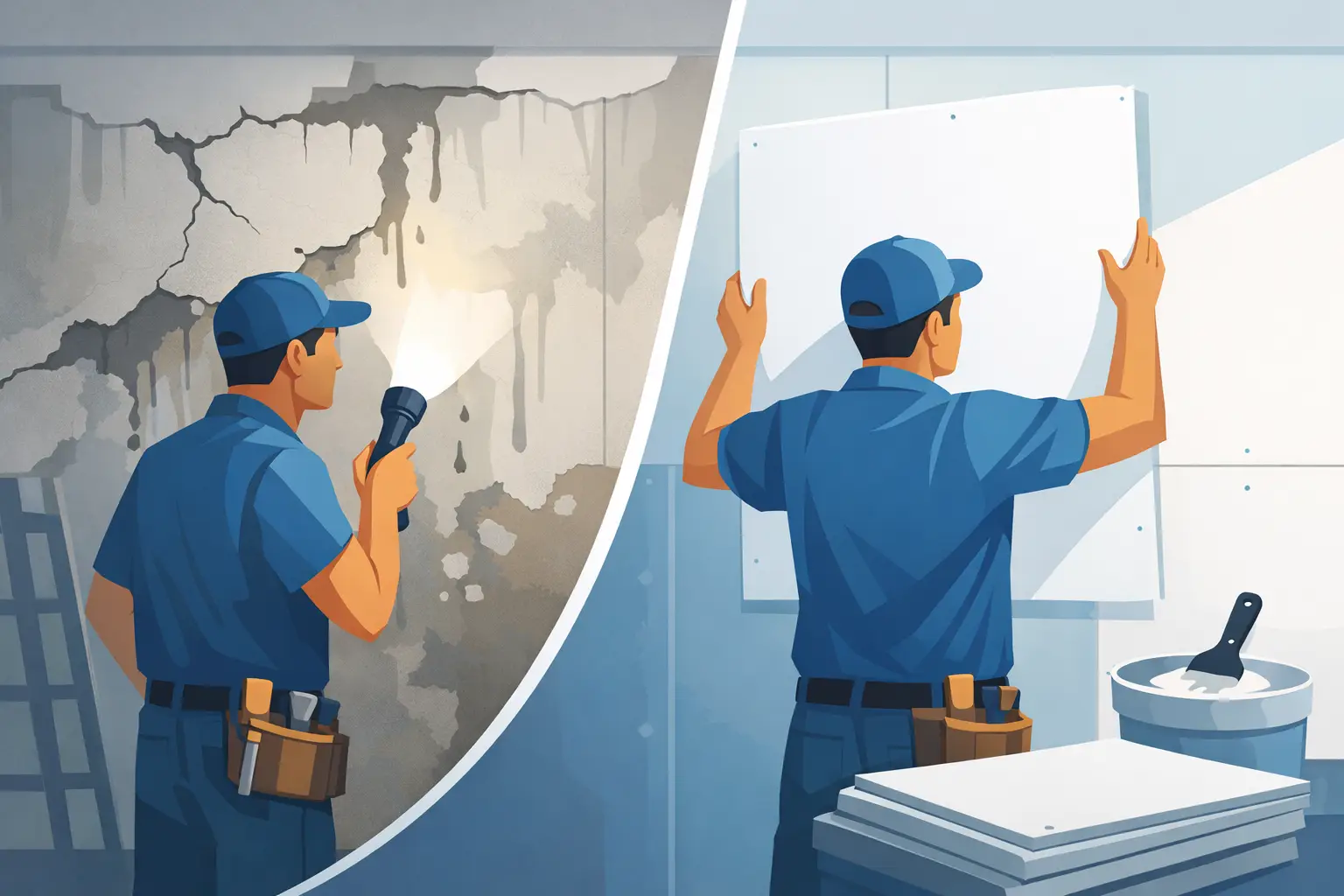
A small drywall crack is one thing. A wall that keeps staining, crumbling, or growing soft to the touch is something else entirely. If you are wondering when should drywall be replaced, the short answer is this: replace it when the damage goes beyond a stable cosmetic repair, or when the wall is no longer sound, clean, or worth patching.
For many homeowners and condo owners, the challenge is knowing where that line is. Drywall is designed to be repaired in many cases. Nail pops, minor dents, small holes, and light surface cracks are usually straightforward fixes. But once moisture, mold, movement, or repeated damage enters the picture, trying to patch over the problem can leave you paying twice.
When should drywall be replaced instead of repaired?
The biggest factor is not how bad the wall looks on the surface. It is whether the drywall behind the finish is still solid and reliable. If the gypsum core has weakened, the paper facing is peeling apart, or the panel has absorbed water and lost its shape, replacement is usually the better option.
Water damage is one of the clearest examples. A brown stain on the ceiling does not always mean the drywall needs to come out, especially if the leak was minor, repaired quickly, and the board dried fully without sagging. But if the area feels soft, bubbles under paint, crumbles when touched, or has visible swelling, that drywall has likely lost its integrity. In that case, a surface repair may look better for a while, but it will not be a lasting fix.
The same logic applies to mold. If drywall has visible mold growth because it stayed wet long enough to support contamination, replacement is often the safest and cleanest route. Drywall is porous. Once moisture and mold work into the material, cleaning the surface alone may not solve the problem.
Large holes and repeated patch areas can also point toward replacement. A single cutout for plumbing access is not a problem if repaired properly. But when one section of wall has been opened, patched, reopened, and patched again, the surface can become uneven and harder to finish cleanly. At a certain point, replacing a larger section gives a smoother result and often saves labor.
Signs your drywall is past a simple patch
Some damage is obvious. Some is easier to miss until painting begins or repairs are underway. Soft spots are a major warning sign. Drywall should feel firm. If it presses in easily, flakes apart, or sounds hollow in a damaged way rather than a normal cavity sound, the panel may be compromised.
Sagging is another strong indicator, especially on ceilings. Ceiling drywall carries weight, so once it starts to droop from water exposure, poor fastening, or age-related failure, replacement is usually the safest option. Trying to skim over a sagging ceiling does not fix the structural issue.
Watch for staining that keeps returning. If a stain bleeds back through fresh paint, there may be an unresolved moisture issue or damage deeper in the board. Cracks that repeatedly reopen can also suggest movement, loose joints, or failure in the surrounding section. Some cracking can be repaired. Recurring cracking in the same place often means more than a cosmetic patch is needed.
A musty smell, peeling tape seams, swelling around baseboards, and damaged corners that extend deep into the wall can all suggest replacement is the more dependable choice.
Damage that can usually be repaired
Not every blemish calls for demolition. In fact, much of the drywall repair work in homes and condos involves problems that can be fixed without replacing full sheets. Small holes from door handles, dents from furniture, popped fasteners, minor seam cracks, and surface wear from everyday use are usually repairable.
This is especially true when the drywall is dry, solid, and flat. In those cases, a proper repair can restore the appearance of the wall and prepare it for a smooth paint finish. For landlords and homeowners getting a room ready for resale or repainting, targeted repairs often make good sense when the underlying drywall is still in good condition.
The key is doing more than covering the mark. A quality repair blends the damaged area into the surrounding surface so it does not flash, sink, or stand out after painting. That is where experience matters.
Water damage changes the decision fast
If there is one issue that most often shifts a wall from repair to replacement, it is water. Drywall and moisture do not mix well. Even if the outside looks acceptable at first, the inner core can weaken, stain, or support microbial growth.
When should drywall be replaced after a leak? Usually when the board has sagged, softened, warped, or remained wet long enough to deteriorate. Ceiling leaks are especially common in bathrooms, kitchens, and condo units affected by plumbing issues from above. In those situations, removing the damaged section and replacing it with new drywall often gives a cleaner, safer, and more predictable result.
The source of the water always needs to be fixed first. Replacing drywall before the leak is resolved only resets the clock on the same problem.
Older walls may need a broader approach
In older homes, drywall damage is not always isolated. You may find patched-over cracks, uneven surfaces, brittle corners, old tape failures, or signs of previous water events hidden under layers of paint. If multiple sections are failing at once, replacing one small area may not give the clean finished look you want.
This is common when preparing for interior painting. A room can technically be patchable, but if half the walls need extensive correction, broader replacement may produce a better final result. It depends on the age of the surfaces, the extent of visible defects, and how smooth the homeowner wants the room to look afterward.
That is why a professional assessment matters. The lowest upfront option is not always the best value if it leaves visible imperfections or requires repeat work later.
Why partial replacement is often the smart middle ground
Homeowners sometimes assume the choice is between a tiny patch and tearing out an entire room. In reality, many projects fall in the middle. A damaged section of ceiling, one cutout area, or a water-affected lower wall can often be removed and replaced without disturbing everything around it.
This approach keeps the repair focused while still removing compromised material. It is often the right answer when the damage is too severe for filler and tape, but not widespread enough to justify full-room replacement.
A well-executed partial replacement should blend with the surrounding surface, match the wall plane, and leave the room ready for proper priming and painting. Clean workmanship matters here because poor seam work will still show, even with fresh paint.
Cost matters, but so does finish quality
It is natural to ask whether replacement costs more than repair. Sometimes it does. But not always by as much as people expect. A heavily damaged wall can take significant labor to stabilize, patch, skim, sand, and rework. If the drywall still remains questionable afterward, that labor may not be money well spent.
Replacement can actually be the more efficient option when the damaged area is unstable or extensive. It also tends to give a more consistent finish, especially before painting. For visible areas like living rooms, hallways, bedrooms, and ceilings, that finish quality matters.
For a company like Maximum Services, the goal is not to oversell replacement. It is to recommend the option that gives a clean, durable result and saves the customer from recurring problems.
The best time to replace drywall
The best time to replace drywall is before cosmetic work begins, not after fresh paint goes on and the defects start showing again. If you already know a wall has soft spots, water damage, mold concerns, or failing seams, handling it properly first will protect the rest of the finishing work.
This is especially important if you are getting a property ready for tenants, preparing a condo for sale, or updating a room after popcorn ceiling removal. The drywall underneath needs to be stable and finish-ready. Otherwise, even good paint will only highlight the flaws.
If you are not sure whether a damaged wall needs repair or replacement, the safest move is to have it assessed by an experienced drywall professional. A reliable contractor should be able to tell you what can be saved, what should come out, and what will give you the best long-term result without unnecessary work.
A clean wall is not just about appearance. It is about knowing the surface behind the paint is solid, dry, and built to last.
3 Responses
[…] loose, damaged, or unstable material. If drywall has softened from water, it may need to be cut out and replaced rather than covered with compound. If tape has separated along a seam, the failed tape is removed […]
[…] If the drywall has swollen, crumbled, or become soft to the touch, affected material may need to be removed and replaced. Once the wall is sound and dry, stain-blocking primer can prevent discoloration from bleeding into […]
[…] drywall has softened, crumbled, or developed visible mold, damaged material may need to be removed and replaced. Once the area is stable and dry, stain-blocking primer and quality paint can restore the finish. […]