
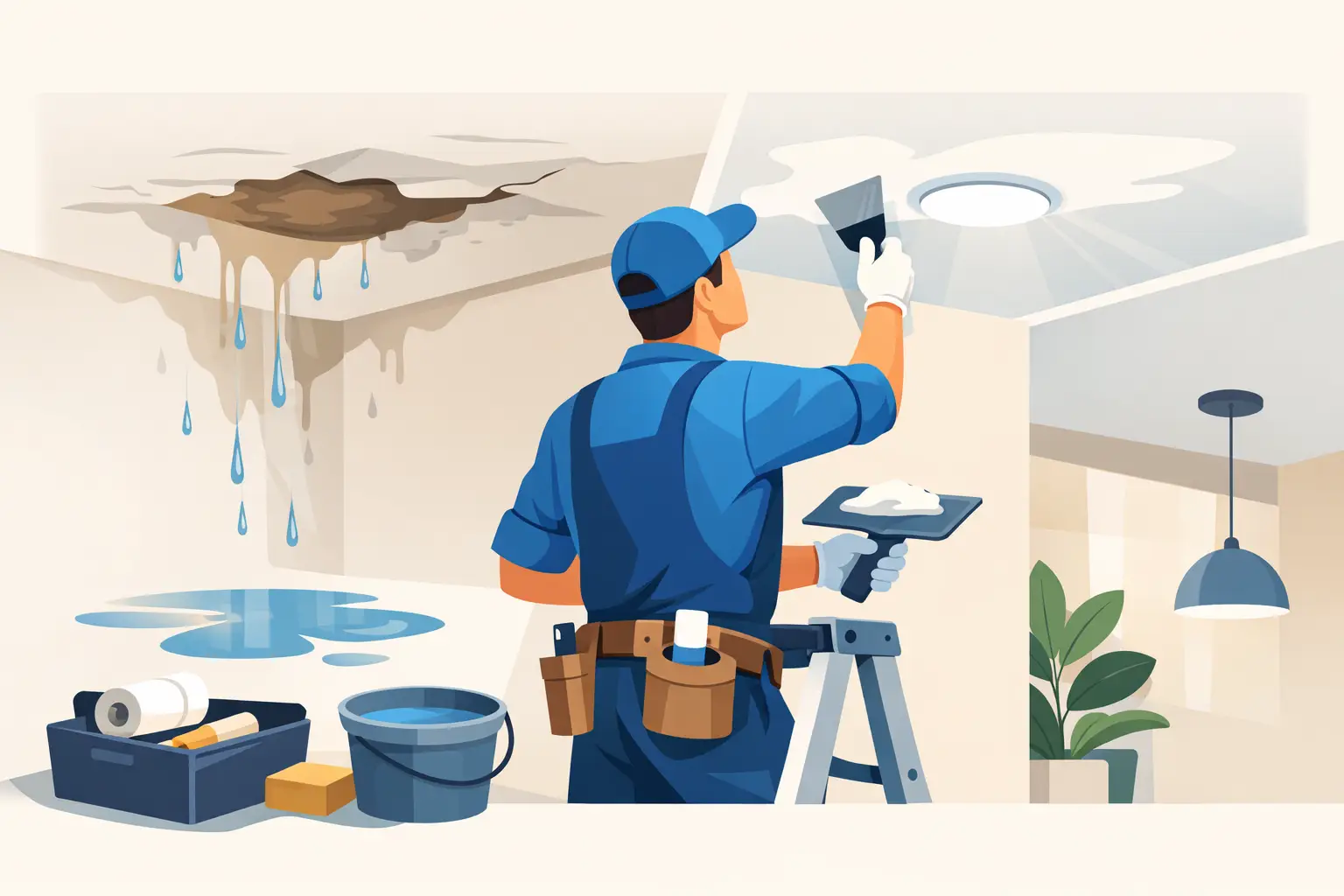
A ceiling stain rarely stays just a stain for long. What starts as a yellow ring or a soft spot can turn into peeling paint, sagging drywall, and a repair that spreads farther than most homeowners expect. That is why ceiling water damage repair should be handled properly the first time, especially when the goal is not just to hide the mark, but to restore a clean, solid finish that lasts.
In homes and condos, ceiling damage usually shows up in the most visible places – over a bathroom, under an upstairs tub, below a roof leak, or near a plumbing line. The cosmetic problem is obvious, but the real issue is what sits behind it. Water weakens drywall, stains compound, loosens tape joints, and creates texture and paint problems that simple patching will not fix.
What causes ceiling water damage
Most ceiling damage comes from one of a few common sources. A roof leak is one of them, especially after heavy rain or ice buildup. Plumbing leaks are just as common, particularly around bathrooms, kitchens, and laundry areas. In condos, the source may be a unit above, a mechanical line, or a building issue that affects more than one ceiling.
The visible damage does not always tell you how serious the problem is. A small stain can come from a slow leak that has been active for months. A larger soft area may come from a one-time overflow that saturated the drywall quickly. That difference matters because the repair approach changes depending on whether the water exposure was light, repeated, or severe.
Before any ceiling is repaired, the source of the moisture has to be addressed. If the leak is still active, any finishing work is temporary. Paint can blister again, joints can reopen, and the damage can return through the new surface.
When ceiling water damage repair is more than a patch
Homeowners often hope the fix will be limited to primer and paint. Sometimes that is possible, but only when the drywall is still structurally sound and the damage is limited to a surface stain. In many cases, the ceiling needs more than cosmetic work.
Drywall that has absorbed too much water loses strength. It can sag between framing members, crumble at the edges, or develop soft sections that no longer hold screws or joint compound properly. Tape may bubble, nail pops may appear, and textured finishes may separate from the surface. If that material stays in place, the ceiling may look acceptable for a short time, but the finish usually fails.
A proper assessment looks at more than color changes. The contractor should check for softness, swelling, joint movement, peeling layers, and the size of the affected area. In some cases, a localized repair is enough. In others, replacing a section of drywall is the better long-term solution.
Signs the ceiling likely needs drywall replacement
There are a few situations where replacement is usually the right call. If the ceiling is sagging, the drywall has likely taken on too much moisture. If pressing lightly on the area feels soft or spongy, the core is compromised. If there is cracking around the damaged section or visible separation at the seams, the water has already affected the integrity of the assembly.
Another common issue is repeated staining. Even after the leak is fixed, older water-damaged drywall can continue to cause problems if the paper face has deteriorated or if the area was previously patched without proper sealing. That is why experienced contractors do not rely on appearance alone. They look at whether the ceiling can still be finished to a stable, durable standard.
For many Toronto and GTA property owners, this matters as much for appearance as for function. A repaired ceiling sits right in the line of sight. Uneven patches, flashing paint, poor texture blending, or visible joints stand out immediately, especially in bright rooms and condo units with smooth ceilings.
What a proper repair should include
Good ceiling water damage repair is a process, not a quick cover-up. Once the leak source is resolved and the area is dry, the next step is removing any damaged material that cannot be saved. That may mean cutting out a section of drywall, replacing tape, or rebuilding a joint where the water caused separation.
After the damaged area is removed or stabilized, the surface needs to be rebuilt carefully. New drywall has to be fitted properly, secured cleanly, and finished so it blends with the surrounding ceiling plane. Joint compound is applied in stages, with drying and sanding between coats. Rushing this part is one of the main reasons repaired ceilings remain visible.
Stain blocking is another step that should not be skipped. Water marks can bleed through fresh paint if the area is not sealed correctly. A quality stain-blocking primer helps prevent that problem and creates a uniform base for the topcoat.
The final stage is matching the finish. On a smooth ceiling, that means making the repair disappear as much as possible under paint. On older textured ceilings, it means getting close enough in pattern and appearance that the repaired section does not draw attention. This is where detail matters most.
Why ceiling repairs often fail
Most failed repairs come down to one of three issues. The leak was not fully resolved, the damaged drywall was left in place when it should have been replaced, or the finishing work was done too quickly.
Ceilings are unforgiving. Gravity works against the repair, light exposes imperfections, and broad flat surfaces show every ridge and seam. If the patch is not feathered properly, if the primer is wrong, or if the paint sheen does not match, the repair stays visible.
There is also a timing issue. Water-damaged ceilings need to be dry before repair begins. If the area is closed up too soon, trapped moisture can lead to adhesion problems, staining, or further deterioration. It depends on the source of the leak and how much water was involved, but drying time is part of doing the job right.
Ceiling water damage repair in condos and occupied homes
Condo owners and homeowners usually want the same thing – minimal disruption and a finished result that looks clean again. That sounds simple, but ceiling repair inside an occupied space requires planning.
Dust control, floor protection, and careful prep matter just as much as the repair itself. If the work area is over a living room, hallway, bedroom, or kitchen, keeping the space orderly makes a big difference. The same is true for scheduling. Many customers are balancing work, family routines, tenants, or building access rules, so clear communication and on-time service are part of the value.
In condos, there can also be coordination issues if the source came from another unit or a building system. The repair may need to wait until management, plumbing, or restoration work is complete. A professional contractor should be able to step in once the area is ready and complete the cosmetic restoration without creating more disruption than necessary.
What to look for when hiring a contractor
Not every painter or drywall company is equipped to handle ceiling water damage well. The best choice is a contractor who understands both drywall repair and final finishing, because the job is not done when the hole is patched. It is done when the ceiling looks right again.
Ask whether they handle drywall replacement, seam repair, stain blocking, and painting as part of the process. Ask how they protect the space and what they do to blend the repair with the surrounding ceiling. If the damaged section is near a textured area or an older ceiling finish, experience matters even more.
This is also where reputation counts. A company that has been doing interior repairs for years should be able to explain the process clearly, set realistic expectations, and deliver a clean result without overselling what is possible. Maximum Services has built its reputation around that kind of practical, detail-focused work.
Cost, scope, and what affects the repair
The price of ceiling repair depends on the size of the affected area, the cause of the damage, the condition of the drywall, and the level of finish required. A small stain with no structural damage is very different from a sagging bathroom ceiling that needs drywall replacement, re-taping, priming, and full repainting.
Accessibility can also affect the scope. High ceilings, tight hallways, furnished rooms, and condo rules can all influence labor and setup time. So can finish matching. Smooth ceilings often require broad skim work to blend the patch invisibly, while textured ceilings may take extra effort to get a consistent appearance.
That is why accurate quoting matters. A reliable contractor should assess the actual condition of the ceiling rather than offering a one-price-fits-all answer from a photo alone.
A clean ceiling makes a room feel cared for again, but the real value is knowing the repair was done properly from the drywall through the final coat of paint. When water damage shows up overhead, the best next step is not a quick cover-up. It is a professional repair that restores the surface, protects the finish, and lets you move on with confidence.
No responses yet