
A door can make an otherwise well-kept room look neglected fast. A deep dent, a loose frame, peeling paint, or a hole near the handle draws attention every time someone enters the room. This guide to repairing door damage explains what different types of damage can mean, why a proper repair matters, and when it makes more sense to bring in an experienced finishing professional.
For homeowners, condo owners, and landlords, the goal is not simply to hide a mark. The repair should restore a smooth, solid surface that blends with the surrounding trim, wall, and paint. That takes the right preparation, materials, and attention to detail.
Start With the Cause of the Damage
Before repairing a door, it is worth identifying how the damage happened. The cause often determines whether the issue is cosmetic or points to a larger problem with the door, frame, hinges, or nearby drywall.
Small dents and chips commonly come from furniture moves, pets, everyday impacts, or door hardware. Holes may result from a forceful impact or a failed doorstop. Scrapes along the bottom edge can be caused by dragging, swelling from moisture, or a door that is no longer hanging squarely.
A door that sticks, rubs the frame, or will not latch properly needs a closer look. Seasonal movement can affect wood doors and frames, but persistent rubbing may indicate loose hinges, a shifted frame, excess paint buildup, or moisture damage. Covering the affected area with paint without correcting the underlying issue often leads to a short-lived result.
A Guide to Repairing Door Damage by Type
Dents, scratches, and chipped paint
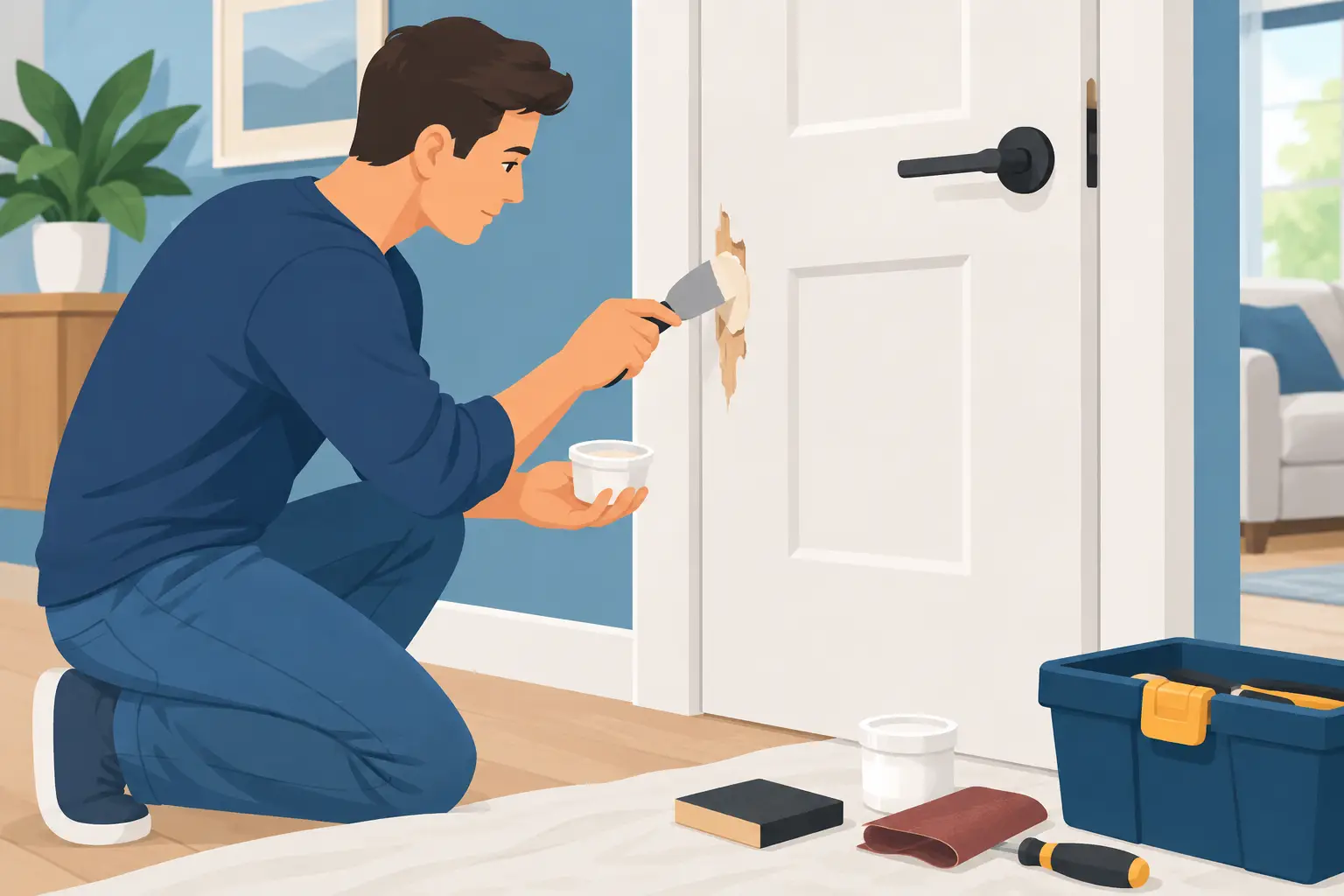
Minor surface damage is usually the most straightforward category, but it still needs careful finishing. A shallow scratch may only require sanding, spot priming, and repainting. Deeper dents in a painted wood or composite door typically need filler applied in thin layers, with sanding between coats to keep the profile flat.
The challenge is matching the repair to the rest of the door. Paint sheen matters as much as color. A patch painted with the wrong finish can flash under natural light and look more noticeable than the original scratch. In many cases, repainting the full face of the door provides a more consistent appearance than touching up one small area.
Holes in hollow-core doors
Interior hollow-core doors are common in condos, apartments, and many homes. They are economical and lightweight, but a hard impact can puncture the thin outer skin. A hole may look like a simple patching job, yet it requires more than filling the opening with compound.
A lasting repair usually involves stabilizing the damaged section, rebuilding the missing surface with appropriate filler or backing material, shaping it carefully, and priming before painting. If the hole is large, located near an edge, or has crushed the core around it, replacement may be the better value. An uneven repair on a flat door panel is difficult to hide, especially under satin or semi-gloss paint.
Cracked or split solid doors
Solid wood doors can split at panel joints, near lock hardware, or along an edge after impact. Wood naturally expands and contracts, so the repair must account for movement. A crack that is cleaned, secured, filled correctly, and refinished can often be restored well.
However, a split around the lockset, hinge area, or latch edge affects more than appearance. These areas carry repeated stress. If the door no longer holds hardware securely or the crack keeps reopening, replacement may be safer and more practical than repeated repairs.
Water damage and swollen door edges
Water damage deserves prompt attention. A swollen bottom edge, bubbling paint, soft wood, or dark staining can mean the door has been exposed to a leak, wet flooring, humidity, or poor ventilation. In a bathroom, laundry room, or entry area, the source of moisture should be corrected before refinishing begins.
Light surface damage can sometimes be sanded, sealed, and repainted once the area is fully dry. Soft or delaminated material usually cannot be restored to a durable condition. Replacing the affected door may prevent the same issue from returning after a fresh coat of paint.
Damaged frames, casings, and surrounding drywall
Door damage does not always stop at the door itself. A slammed door or failed stopper can crack the frame, loosen decorative casing, or create holes in the drywall behind it. These repairs require a coordinated approach because a repaired wall can still look unfinished if the trim lines are uneven or the paint does not match.
Drywall around a door opening needs proper patching, taping where necessary, sanding, priming, and painting. Loose trim should be reset and filled before final coating. When the repair is complete, the door, casing, and wall should read as one clean, finished area rather than a series of separate patches.
Why Preparation Determines the Finish
The visible repair is only one part of the work. Professional-looking results depend on surface preparation. That includes removing loose paint, cleaning dirt and oils, sanding damaged edges smooth, using the right filler for the material, and applying primer where needed.
Skipping primer is a common reason repairs fail to blend in. Filler, bare wood, old paint, and drywall absorb paint differently. Primer evens out the surface and helps the finish coat adhere properly. It also reduces the chance that stains, repairs, or uneven texture will show through later.
Dust control matters as well. Fine sanding dust can settle on walls, floors, furniture, and freshly painted surfaces. A clean work area protects the home and helps produce a smoother coat. For occupied condos and homes, careful masking, floor protection, and cleanup are part of a properly managed repair.
When Repair Makes Sense and When Replacement Is Better
Repair is often the right choice when damage is localized, the door is structurally sound, and the cost of restoring it is reasonable compared with replacement. This is especially true for minor dents, paint damage, small holes, loose trim, and nearby drywall damage.
Replacement becomes more sensible when there is widespread water damage, major warping, severe cracking around hardware, repeated sticking, or extensive damage across a hollow-core door. It can also be the better option when an older door has several previous repairs and no longer provides a clean surface for painting.
There is no one answer for every door. A professional assessment can prevent spending money on a patch that will not hold up or on a replacement that was never necessary.
The Value of a Professional Repair and Paint Finish
Door repairs are highly visible because doors sit at eye level and are used every day. Uneven filler, rough sanding marks, mismatched paint, and drips around hinges or handles stand out quickly. A skilled repair team can evaluate the material, correct the damaged area, prepare the surrounding surfaces, and apply a finish that fits the room.
For rental properties, this helps protect the condition and presentation of the unit between tenants. For homeowners and condo residents, it restores a polished look without allowing a small problem to become a larger one. It also saves the time, mess, and uncertainty that can come with trying to coordinate patching, trim repair, and painting separately.
Maximum Services has been helping Toronto and GTA property owners with drywall repair and interior painting since 2001. The right approach is always based on the condition of the door, the surrounding surfaces, and the finish you expect when the work is complete.
If a damaged door is affecting the look of your room, address it before the wear spreads or the repair becomes more complicated. A clear assessment and careful finish can make the space feel maintained again.
No responses yet