
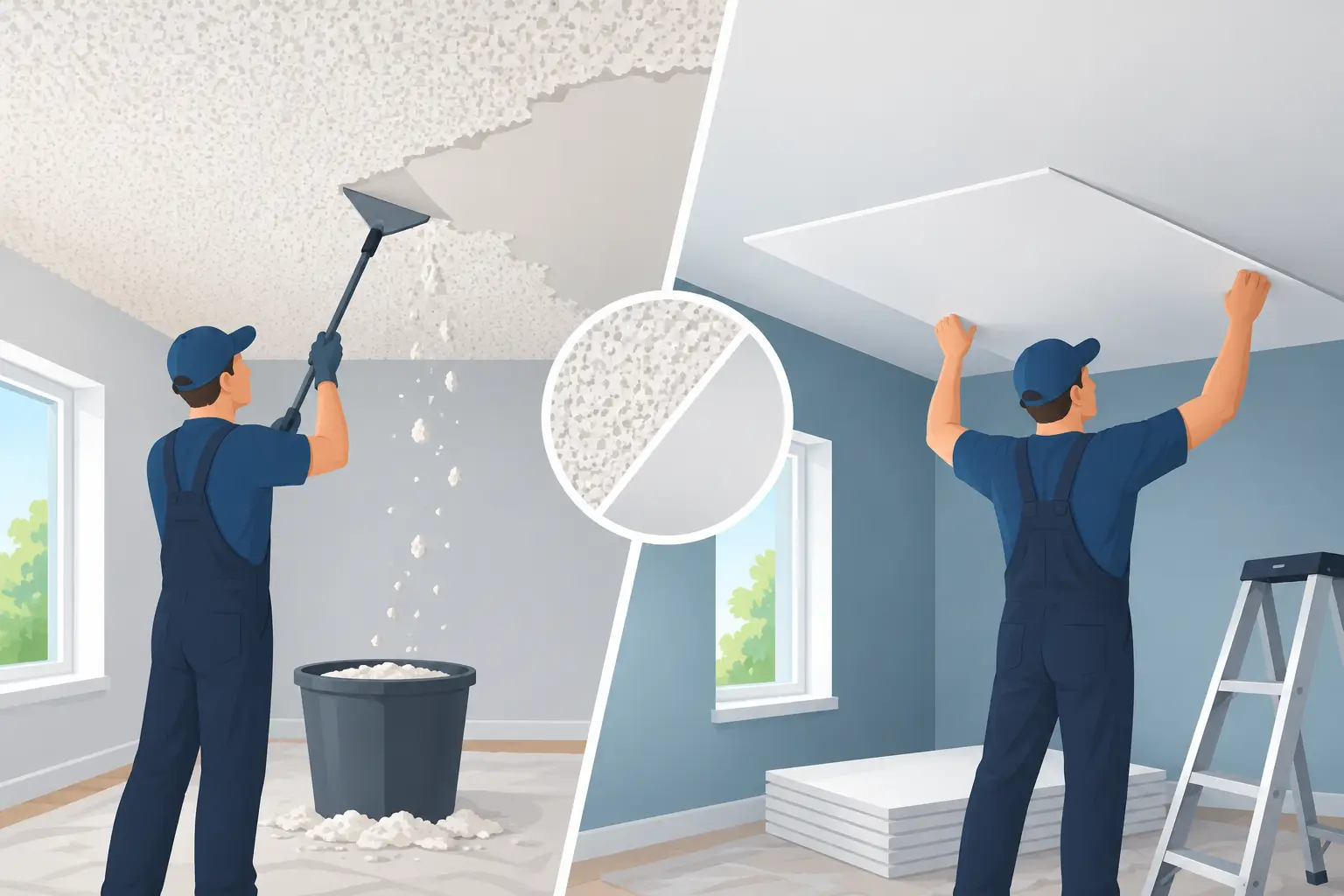
A popcorn ceiling can make an otherwise well-kept room feel dated, dim, and harder to maintain. When homeowners compare popcorn removal versus covering, the right choice usually comes down to the ceiling’s condition, the desired finish, the room’s use, and how long they plan to keep the property.
Both options can improve the look of a room. However, they involve different levels of preparation, cost, disruption, and long-term value. A professional assessment helps prevent a quick cosmetic decision from turning into a larger repair later.
What Popcorn Ceiling Removal Involves
Removing a popcorn texture means taking the existing ceiling finish down to a smooth, paint-ready surface. The work commonly includes protecting floors and walls, testing the material when appropriate, carefully removing the texture, repairing damaged drywall, skim coating, sanding, priming, and painting.
The goal is not simply to scrape away the texture. Once popcorn material is removed, the drywall underneath often needs attention. Older ceilings can have uneven joints, nail pops, cracks, water stains, previous patchwork, or areas where the paper surface has been damaged. A clean, smooth result depends on correcting those issues before the final paint goes on.
For homeowners who want a modern, flat ceiling, removal is generally the more complete solution. It eliminates the textured finish rather than hiding it, which can make future repairs, repainting, and lighting updates easier to manage.
When removal is usually the better choice
Popcorn removal is often a strong choice when the existing texture is already damaged, stained, peeling, or patched in several places. Covering a ceiling with ongoing moisture damage or loose material does not solve the underlying problem. The source of the damage should be repaired first, then the ceiling should be properly restored.
Removal also makes sense when a homeowner is preparing to sell, renovating multiple rooms, or updating a condo that has an older overall finish. A smooth ceiling creates a cleaner visual line and reflects light more evenly, especially in rooms with lower ceilings or limited natural light.
It is also the better route when ceiling-mounted fixtures need to be moved or added. Electrical work can expose or damage textured areas around a fixture. Starting with a repaired, smooth ceiling gives the room a more consistent final appearance.
What It Means to Cover a Popcorn Ceiling
Covering a popcorn ceiling means installing a new finish over the existing texture rather than removing it. Depending on the condition of the surface and the desired appearance, this may involve new drywall, ceiling panels, or another approved overlay system. In some cases, a professional may apply a skim coat, although that process still requires careful preparation and is not always suitable over loose or heavily textured material.
Covering can be practical when the existing ceiling is stable and the homeowner wants to avoid disturbing the original texture. It may also be considered in properties where material testing raises concerns. Textured ceilings installed before the 1980s may contain asbestos, so the material should be tested by a qualified provider before it is scraped, sanded, drilled, or otherwise disturbed.
A cover-up solution is not automatically faster or less expensive. Adding drywall overhead requires accurate layout, secure fastening into framing, treatment of seams, finishing, and painting. It can also lower ceiling height slightly and require adjustments around lights, vents, crown molding, or sprinkler components in condo buildings.
When covering may make more sense
Covering may be the preferred option when the popcorn finish is firmly bonded, the ceiling has minor visual issues, and testing or building conditions make removal less desirable. It can also be useful when a homeowner wants a new ceiling plane without exposing an older drywall surface that may require extensive repair.
For a rental property or a room with a limited renovation budget, covering can sometimes provide a presentable finish with less surface disturbance. The final decision should still account for access, ceiling height, lighting, and whether the added material will affect doors, trim, or mechanical fixtures.
Popcorn Removal Versus Covering: Key Differences
The biggest difference is what happens to the original ceiling. Removal addresses the existing texture directly. Covering leaves it in place and creates a new finished surface below or over it.
Removal usually provides the most natural-looking result because it preserves the room’s original ceiling height and allows repairs to be made at the drywall level. It is often the better investment for homeowners seeking a fully updated interior. The trade-off is that removal can reveal hidden imperfections that need skilled repair and finishing.
Covering can reduce direct contact with the old texture, but it adds material to the ceiling assembly. In a room with already-low ceilings, even a small reduction in height can be noticeable. It may also complicate future access to electrical boxes, plumbing above the ceiling, or repairs after a leak.
The cost comparison depends on the ceiling, not just the square footage. A smooth-looking popcorn ceiling may still need substantial drywall work after removal. On the other hand, a cover-up can become more involved if there are many lights, vents, bulkheads, or uneven framing conditions. An in-person quote is the most reliable way to compare the real cost of each option.
Consider the Condition Before Choosing
A reliable contractor will look beyond the texture itself. Water stains, sagging areas, loose drywall tape, cracking, and repeated patch repairs should be addressed before either removal or covering begins. If a ceiling has been affected by a roof leak, plumbing issue, or condensation, the moisture source must be corrected first.
Condo owners should also consider building rules. Many buildings have set work hours, elevator booking requirements, insurance requirements, and restrictions on debris removal. Popcorn ceiling removal creates dust and requires careful containment, while drywall overlay work requires bringing materials through common areas. A contractor experienced with occupied homes and condo projects can plan the work around those practical requirements.
For occupied homes, protection and cleanup matter as much as the finished surface. Furniture should be covered or moved as needed, floors protected, and work areas contained to limit dust travel. The ceiling should then be primed and painted with a consistent finish so repaired areas do not stand out under normal room lighting.
The Finish You Want Matters
Most homeowners who remove popcorn choose a smooth ceiling finish. Smooth ceilings are current, easier to repaint, and work well with modern lighting and clean interior paint colors. They also make future drywall repairs less obvious when the work is properly blended and painted.
That said, smooth does not mean perfectly flawless under every angle of light. Large windows, pot lights, and glossy paint can reveal minor surface variations on any ceiling. A professional finisher can recommend the appropriate level of surface preparation and a ceiling paint sheen that provides a clean, even appearance without drawing attention to normal drywall characteristics.
If you are covering the ceiling, ask what the finished edges will look like at walls, moldings, vents, and light fixtures. Those details determine whether the result looks like an intentional renovation or an added layer that is difficult to hide.
Choose a Solution That Holds Up
A popcorn ceiling project is often part of a larger refresh that includes drywall repairs and interior painting. The best choice is the one that resolves the current issue, fits the property, and supports the finish you want for years to come.
Maximum Services has helped Toronto and GTA homeowners and condo residents restore tired ceilings with careful preparation, clean job sites, and dependable finishing work since 2001. Before committing to removal or covering, request an assessment that considers the ceiling condition, any testing requirements, access, and the final painted look. A clear plan at the start is the best way to end with a ceiling that looks clean, consistent, and properly finished.
No responses yet