
A popcorn ceiling can make an otherwise well-kept room feel dated, but removal should not begin with a scraper and drop cloth. This guide to popcorn ceiling testing explains the first step a careful contractor takes before planning removal: finding out whether the textured material contains asbestos.
For homeowners, condo owners, and landlords, testing protects more than the project schedule. It helps avoid unnecessary exposure, prevents costly work stoppages, and ensures the ceiling is handled using the right process from the start. A clean, smooth ceiling is the goal, but getting there safely matters just as much as the finished appearance.
Why Popcorn Ceiling Testing Comes First
Many popcorn ceilings installed before the mid-1980s may contain asbestos. The mineral was commonly added to textured coatings because it helped with fire resistance and durability. Not every older ceiling contains asbestos, and some newer ceilings may have been applied over older materials. Appearance alone cannot confirm what is in the texture.
A ceiling that is intact and undisturbed may not create an immediate concern. The risk changes when the material is scraped, sanded, drilled, patched, or damaged. These activities can release fine fibers into the air if asbestos is present. That is why testing should happen before removal, major drywall repair, recessed-light installation, or other work that disturbs the ceiling finish.
Testing also makes the quote and schedule more accurate. If the result is negative, a contractor can proceed with standard containment, removal, drywall finishing, and painting procedures. If the result is positive, the project needs asbestos-specific handling, which affects the scope, timeline, and cost.
When You Should Test a Popcorn Ceiling
Testing is most strongly recommended when the home or building was constructed before 1985 and the ceiling texture has not been previously documented as asbestos-free. However, age is not the only factor. Renovations can leave layers of materials behind, and condo or rental properties may have limited records of earlier work.
Arrange testing before you approve work if the ceiling will be removed, repaired extensively, or opened for electrical, plumbing, or HVAC access. Small holes for fixtures or minor repairs can also disturb material, so it is better to ask early than to discover a testing requirement after work has begun.
Testing is particularly useful in these situations:
- The ceiling texture is original or its installation date is unknown.
- You see water damage, cracks, peeling texture, or previous patch areas.
- You are buying, selling, renting, or preparing a property for new tenants.
- A renovation involves opening ceilings, installing lights, or changing ventilation.
- Your building manager, insurer, lender, or local authority requires documentation before work starts.
A ceiling installed after asbestos was restricted is less likely to contain it, but “less likely” is not the same as confirmed. Documentation from a previous professional assessment may be enough, but a verbal assurance from a former owner or contractor is not a reliable substitute for a lab result.
How Professional Popcorn Ceiling Testing Works
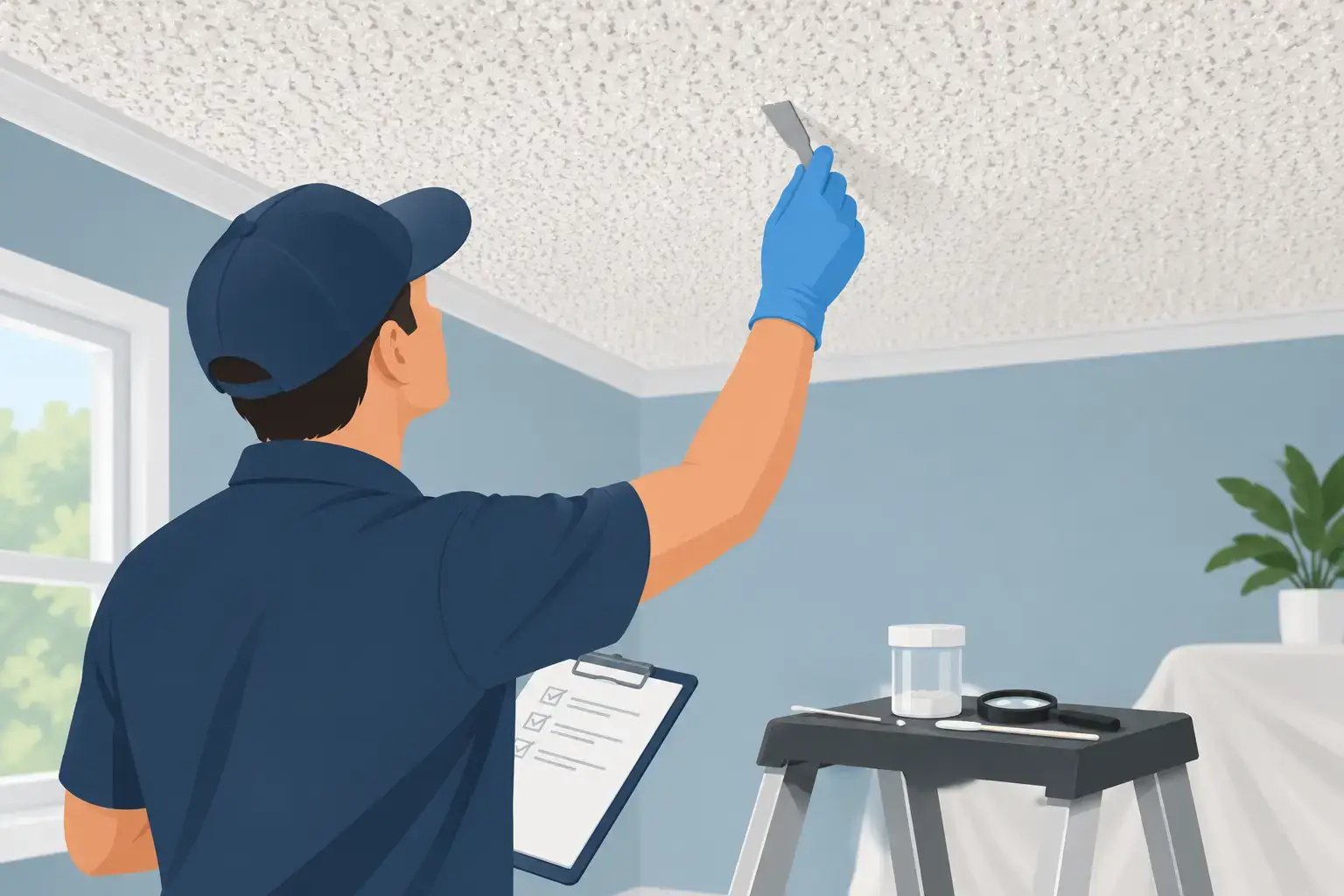
A proper assessment begins with a visual review of the ceiling and the planned scope of work. A qualified inspector or trained professional looks for changes in texture, layers, repairs, water staining, and areas that may need separate samples. Popcorn texture is not always consistent throughout a home, especially when rooms were renovated at different times.
The sample is then collected carefully from a representative area and sent to an accredited laboratory for analysis. Depending on the property and the material’s appearance, more than one sample may be needed. A single sample taken from one room does not always confirm the condition of every textured ceiling in the building.
The laboratory report identifies whether asbestos is present and, when it is detected, the type and percentage found. Keep this report with your renovation records. It gives your contractor clear direction and can be useful for future maintenance, property transactions, or insurance documentation.
Results often return quickly, but turnaround times vary by laboratory and service level. Testing early is the best way to avoid a last-minute delay once painters, drywall crews, electricians, or flooring installers are scheduled.
Why Sampling Should Not Be Treated as a Casual DIY Task
Some homeowners see online instructions for collecting a ceiling sample themselves. The issue is not simply obtaining a small piece of texture. Cutting into a ceiling can create dust, and a poorly collected sample may not represent the material that will actually be disturbed during removal.
A professional can select appropriate sample locations, limit disturbance, package the material correctly, and help interpret the result. For a renovation project, that added clarity is usually worth it. It supports a safer work plan and reduces the chance of stopping halfway through a job because the wrong area was sampled or the report is incomplete.
Understanding Your Test Results
A negative result generally means the tested material did not contain asbestos at the laboratory’s detection threshold. Your contractor can then plan standard popcorn ceiling removal or repair. Even with a negative result, good preparation still matters. Ceiling removal creates dust, requires protection for floors and furniture, and often reveals drywall imperfections that need professional repair before painting.
A positive result does not mean you must immediately remove the ceiling. If the material is in good condition and will not be disturbed, leaving it in place may be an option. The right decision depends on its condition, your renovation plans, and local requirements.
If removal or disturbance is necessary, use a qualified asbestos abatement provider. Do not assume a regular demolition or painting crew can perform this work. Proper abatement may include work-area containment, controlled removal methods, protective equipment, waste handling, and clearance steps required by the jurisdiction.
After abatement is complete, a drywall and painting contractor can take over the restoration work. This may involve repairing the ceiling surface, applying skim coats for a smooth finish, priming, and painting. Separating abatement from finishing work helps ensure each phase is handled by the right professionals.
Planning the Project After Testing
Once the test result is available, your contractor can provide a more dependable plan. For an asbestos-free ceiling, the scope usually includes protecting the room, removing or flattening the texture, repairing joints and damaged drywall, sanding for a uniform surface, priming, and applying ceiling paint. The amount of repair needed depends on what is behind the texture.
This is where homeowners should be realistic about trade-offs. Scraping a popcorn ceiling is not always the fastest route to a flawless finish. Some ceilings have poor taping, old patches, or uneven drywall that the texture was hiding. A quality finish may require skim coating, which adds time but produces a smoother result.
In some homes, covering the existing texture with new drywall can be considered instead of removal. That approach may reduce disturbance, but it lowers ceiling height slightly and requires attention around trim, light fixtures, vents, and sprinkler systems. The best option depends on the ceiling condition, building requirements, and the finish you want.
For condo owners, confirm renovation rules before booking work. Management may require proof of testing, approved work hours, elevator reservations, insurance certificates, or debris-handling procedures. Starting this process before the crew arrives keeps the project moving and helps prevent avoidable disruptions.
Questions to Ask Before You Schedule Removal
When requesting quotes, ask whether testing is required before the contractor begins and who is responsible for arranging it. A dependable contractor should explain what is included in the removal quote, what happens if hidden damage is discovered, and how the room will be protected from dust.
You should also ask how the ceiling will be finished after texture removal. Removal alone is not a completed ceiling renovation. The visible result depends on drywall repairs, surface preparation, primer selection, paint quality, and careful cleanup.
If a test result is positive, ask whether the contractor will pause work until licensed abatement is completed. The correct answer should be yes. A contractor who rushes past a positive result may create a much larger problem than an outdated ceiling.
A Cleaner Start for Your Ceiling Project
Popcorn ceiling testing is a small step compared with the full renovation, but it gives the rest of the project a clear direction. It allows the right team to handle the right work, protects occupants and workers, and helps prevent unexpected costs after the room is already covered in plastic.
Before scheduling removal, have the ceiling assessed, keep the lab report, and choose professionals who treat preparation and cleanup as seriously as the final coat of paint. That is how an older ceiling becomes a clean, finished surface without unnecessary surprises.
No responses yet