
A ceiling can make an otherwise well-kept room look unfinished. Water stains, old popcorn texture, drywall seams, patch marks, and uneven paint catch the eye quickly, especially under pot lights or daylight. This guide to smooth ceiling finishing explains what separates a clean-looking ceiling from one that shows every repair after the paint dries.
For most homeowners and condo owners, ceiling work is not just a painting job. A lasting result depends on correcting the surface first, controlling dust, and using the right finishing process for the condition of the ceiling. The goal is a flat, consistent surface that looks clean from every angle, not a quick coat of paint that hides problems for a few weeks.
Start With the Ceiling’s Actual Condition
Before any work begins, the ceiling should be inspected for the cause of visible damage. A brown stain, cracked joint, or sagging area may point to an old or active plumbing issue, roof leak, humidity problem, or movement in the building. Painting over a stain or crack without addressing its source can lead to the same issue returning.
Small nail pops and minor settling cracks are common in houses and condos. These can often be repaired with proper fastening, taping, joint compound, sanding, priming, and repainting. Larger cracks, soft drywall, repeated water marks, or loose sections need a closer assessment. In those cases, the damaged material may need to be removed and replaced rather than covered.
Ceilings also reveal work that walls can hide. Light travels across a ceiling at a shallow angle, making ridges, lap marks, and uneven sanding much more noticeable. This is why careful surface preparation matters as much as the final paint color.
Guide to Smooth Ceiling Finishing: The Essential Process
A professional smooth ceiling finish is built in stages. Skipping one stage may save time at first, but it usually creates visible flaws later.
Protect the Room Before Creating Dust
Ceiling repair and texture removal can create a significant amount of dust. Floors, furniture, vents, doors, and nearby rooms should be protected before scraping, sanding, or cutting drywall. In occupied homes and condos, clean containment is particularly important because dust can travel well beyond the room being repaired.
A careful crew will also plan access, protect common areas where needed, and remove debris as the work progresses. Clean job sites are not only about appearance. They help prevent dust and damage from becoming an added problem for the homeowner.
Remove Loose Texture and Damaged Material
For ceilings with popcorn texture, old repairs, peeling paint, or uneven patches, the existing surface must be stabilized before it can be made smooth. Depending on the ceiling, that may involve scraping texture, removing failed tape, cutting out water-damaged drywall, or feathering the edges of an existing repair.
Popcorn ceiling removal is often more involved than it appears. Some textures were painted over, which makes them harder to remove evenly. Older materials may also require appropriate testing and handling before disturbance. A contractor should assess the ceiling rather than assume every textured surface can be scraped in the same way.
Repair Joints, Cracks, and Patches Correctly
The strongest repairs begin below the surface. Loose drywall should be secured, damaged sections should be replaced, and seams should be retaped where necessary. A crack that is simply filled without proper reinforcement is more likely to reopen.
Joint compound is then applied in thin, controlled coats. Each coat needs enough drying time before the next application and before sanding. Rushing this stage can leave shrinkage, bubbles, visible tape lines, or soft spots beneath the paint.
The repair should extend beyond the damaged area. This wider feathering is what helps the patched section blend into the rest of the ceiling. A small patch with sharp edges may look acceptable before painting, but overhead lighting will often expose it afterward.
Skim Coat When the Surface Needs It
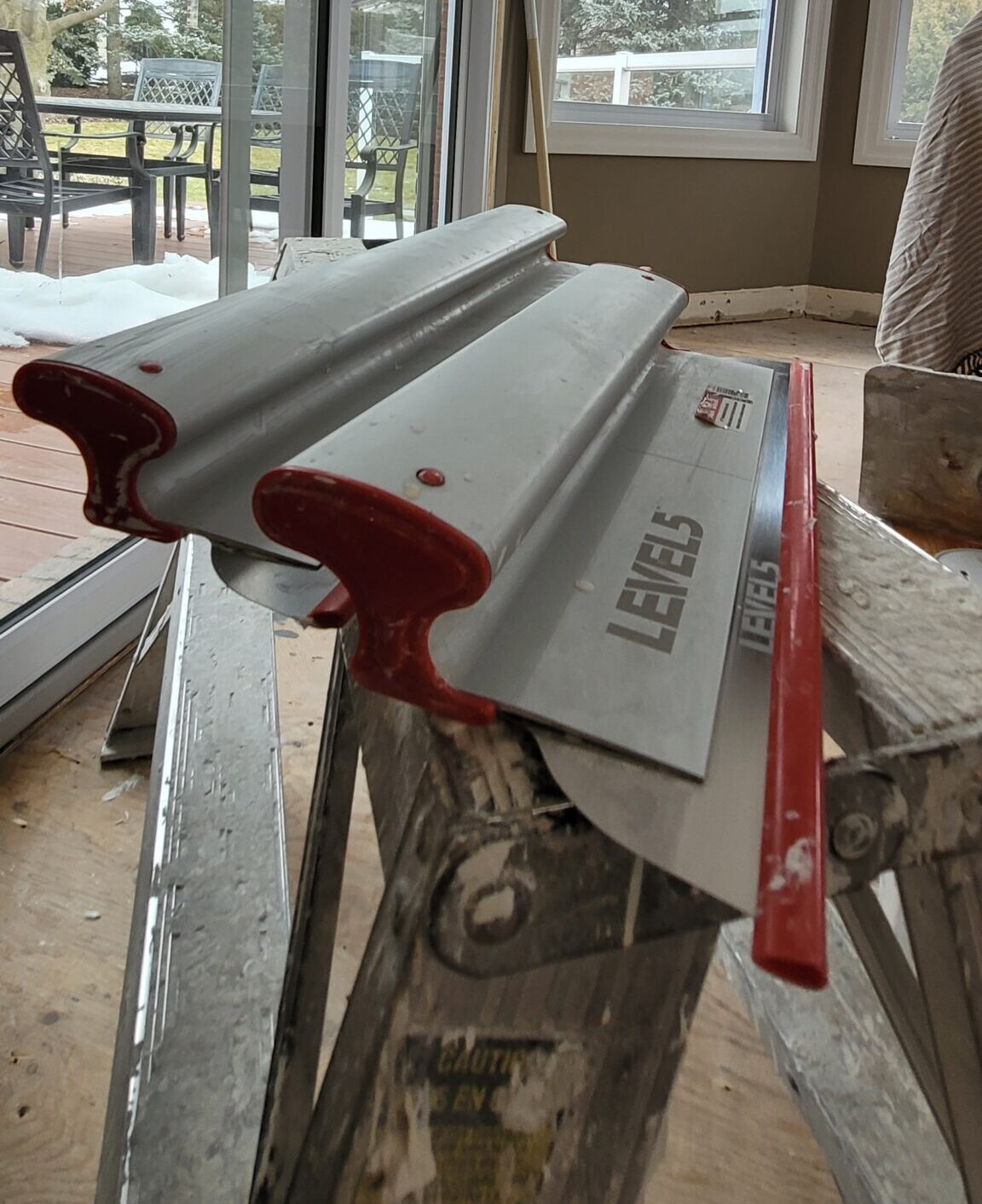
A skim coat is a thin layer of joint compound spread across all or part of the ceiling to create a more uniform surface. It is commonly needed after popcorn removal, widespread patching, old texture removal, or uneven previous repairs.
Not every ceiling requires a full skim coat. If the drywall is in good condition and repairs are limited, localized finishing may be enough. However, when texture removal leaves an inconsistent surface, spot repairs alone can produce a patchwork appearance. A full skim coat takes more labor, but it can provide the cleaner result many homeowners expect from a smooth ceiling.
Sand With Light, Not Guesswork
Sanding makes or breaks the appearance of a smooth ceiling. The aim is not to sand aggressively. It is to remove high spots, soften edges, and create a level transition between repaired and existing areas without damaging the drywall face paper.
Experienced finishers inspect the ceiling with strong directional lighting. This helps reveal shallow dents, ridges, and sanding lines that may not be visible under ordinary room lighting. Additional touch-up coats are often needed after this inspection. That attention to detail is what prevents a ceiling from looking uneven once it is painted.
Prime Repairs Before Painting
Fresh joint compound absorbs paint differently than existing drywall and previously painted surfaces. Without the right primer, repaired areas can flash, meaning they appear duller or shinier than the surrounding ceiling. Primer also helps seal stains after the underlying moisture issue has been resolved.
The type of primer depends on the condition of the ceiling. Standard drywall primer may be suitable for new compound, while stain-blocking primer is often needed for old water marks, smoke residue, or other discoloration. The correct product should be chosen based on the problem, not simply because it is available.
Apply Ceiling Paint Evenly
Ceiling paint should be applied in a consistent pattern with enough coverage to produce a uniform finish. Flat ceiling paint is a common choice because it helps reduce the visibility of minor imperfections. It is not a substitute for proper repairs, but it is generally more forgiving than finishes with more sheen.
The room’s lighting and ceiling height can affect the final choice. In kitchens, bathrooms, or rooms with frequent moisture, a more washable and moisture-resistant paint may be appropriate. The trade-off is that higher-sheen coatings can reveal more surface flaws, so the preparation standard must be higher.
When a Smooth Ceiling Needs More Than Paint
A fresh coat of paint can improve a ceiling that is already sound, but paint will not flatten texture, repair failed tape, or stop an active leak. Homeowners should consider repair and refinishing when they see recurring cracks, bubbling paint, visible seams, patch outlines, water stains, or a textured finish that no longer suits the room.
Condo ceilings deserve special attention because plumbing issues from another unit can leave damage long after the source has been repaired. The affected drywall may remain stained, swollen, or weakened. A proper repair restores the surface instead of leaving a visible reminder of the problem above.
For rental properties, smooth ceiling finishing can also be a practical turnover improvement. Clean, repaired ceilings help a unit look cared for during showings and can make a newly painted room feel substantially more complete.
What to Ask Before Hiring a Ceiling Contractor
The lowest quote is not always the best value if it leaves out necessary prep work. Ask whether the estimate includes protection of floors and furnishings, drywall repair, skim coating if needed, sanding, priming, painting, and cleanup. Clear scope details help avoid surprises once the job has started.
It is also reasonable to ask how dust will be managed, how long the ceiling will need to dry between stages, and whether the contractor has experience with popcorn ceiling removal or water-damaged drywall. The right approach depends on the ceiling’s condition, the size of the area, and whether the space will remain occupied during the work.
Maximum Services has served homeowners and condo residents in Toronto and the GTA since 2001 with drywall repairs, popcorn ceiling removal, and interior painting. A clear assessment before work begins helps ensure the finish matches the condition of the ceiling and the expectations for the room.
A smooth ceiling should not draw attention to itself. When repairs are properly blended, the surface is prepared with care, and the paint is applied evenly, the room simply looks cleaner, brighter, and ready to enjoy. If your ceiling has visible damage or outdated texture, requesting a detailed quote is a practical first step toward getting the work done properly.
No responses yet